


Full report can be found here
A small but notable drop today. I missed this before, but it popped officially today. Earlier this month, ADM(RS) published an audit of the Canadian Coast Guard's Vessel Life Extension Program, the second audit I believe they have done since the CCG has moved under the DND banner. The other was the Marine Navigation Evaluation Audit a few months ago. I didn't post on that as I didn't feel it would be cared much for. This though is a bit more interesying.
A bit of recap, ADM(RS) is the Assistant Deputy Minister (Review Services), National Defence's internal audit and evaluation shop. They audit DND programs. That's the simplest explanation.
That now includes the Coast Guard's various programs. Perhaps the most beurocratic shift of the times, but one that we now get to look out for in the future. The Coast Guard's problems are now DND's problems, complete with management action plans and public reporting of findings.
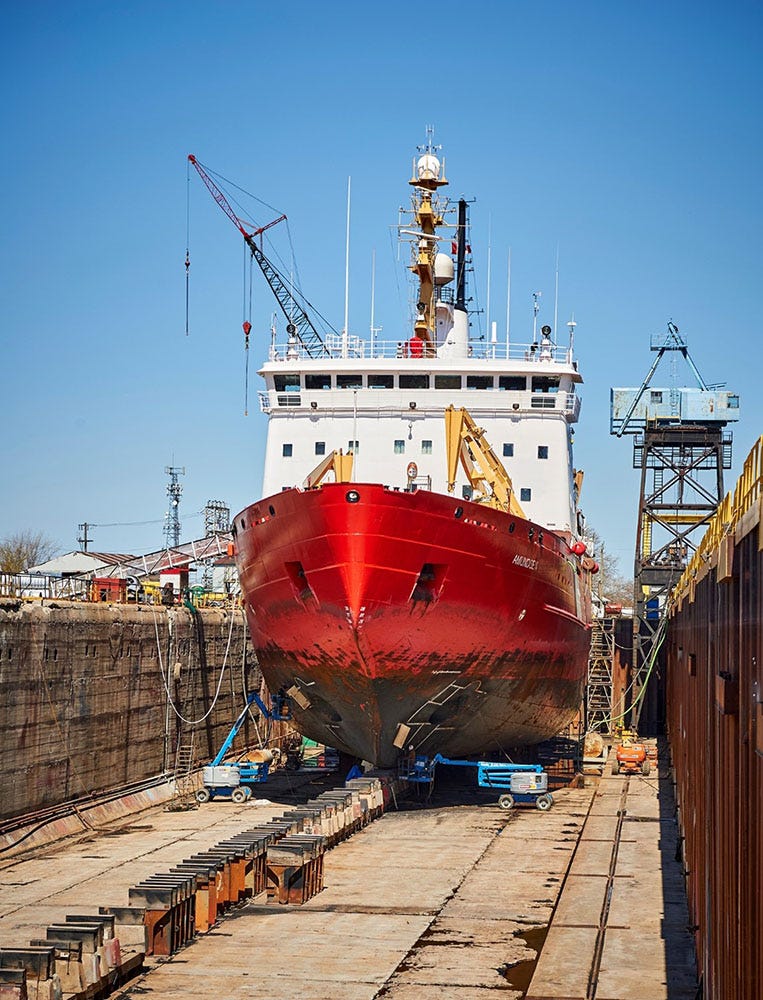
The VLE Program itself was established to try to keep the Coast Guard's aging fleets operational until new ships under thr NSS are delivered. It was expanded in 2019 with a planned investment of $2 billion through 2040.
It's the anchor program for the CCG fleet. As new constructions have slipped and schedules have shifted, VLE is whats supposed to keep the fleet going, which means the health of this program is critical to how Canada can keep capacity strong in the facing of growing demands for SAR, Icebreaking, Environmental Response in our Oceans, etc as we await new vessels.
The audit itself provides us a few major findings, and hands us some numbers that I don't believe have been on the public record before. At least not that I have seen? The CCG tends to be a less documented, more to themselves organization to these things.
The first finding is about schedule alignment. Of the 69 vessels identified for VLE, 23% face gaps of one to nine years between the end of their extended service life and the delivery of their replacement. That works out to ~sixteen hulls that are expected to run out of extended life before their replacement shows up.
On the execution side, of the 44 VLE work periods planned to start, nearly ⅔ started or will start later than planned, and 82% of those planned for completion took or are expected to take longer than estimated.
There were 13 new vessels planned for delivery from 2022 to 2025. Nine of them were or will be delivered late, with an average delay of 3.7 years. An average delivery slip of nearly four years. That isn't to shocking to those of you who have been following. Most of the early NSS projects, as the shipyards have been ramping up, have been experiencing delays as we have been building capacity, buukding up the workforce, and trying to gain experience back, although getting raw numbers like this for averages is exceedingly rare, so I am always happy to see it.
The structural stuff is quieter but arguably more of interest to me personally. There is no unified process or designated lead to integrate scheduling between VLE and new vessel procurement, and information sharing is largely informal and happens vessel-by-vessel. On top of that, the delivery dates in the Fleet Renewal Plan are based on initial Treasury Board submissions and contracts, and are not regularly updated to reflect evolving project risks.
So the plan that decides how long each vessel needs to survive is working from dates that everyone involved knows have already slipped. Oh, and the scheduling guiding principles were last revised in 2016 and are no longer formally followed.
So not only are the CCG operating on hypotheticals, not only are those hypotheticals not kept updated, but the model we use for scheduling and ensuring that there is a transition framework in place both don't exist or what does has been mostly abandoned as a serious guiding principle.
The funny thing is there wasa centralized process that existed, but over the last decade was allowed to lapse and essentially fall to informalities. The program commits to "reinstate" a centralized scheduling process, That's the kind of detail an audit like this will never really dwell on, but it says a lot to me.
As an audit, this is honestly pretty unremarkable. Coordination gaps, stale data, failing and outdated guidelines, a risk register that needs a refresh. Almost every large program you can find has a version of this sitting in a drawer somewhere, and I don't think anyone at CCG will be shocked by any of it.
These kinds of gaps and inefficiencies have long been institutionalized, far before my time. Apathy is a killer, as they say. The Coast Guard's fleet is on average 35+ years old, well beyond it'sintended life. Replacements have been delayed time and time again, especially among the Icebreaker fleet, to the point of pushing deliveries into the 2030s before meaningful bulk begins to arrive, some fleets, like the Hero-class, are likely to add to the growing roster of needed replacements in the coming years, which means VLE carrying more load than it was ever sized for.
All of which working with no unified system in place, guideleines that are admitted to straight up just not exist anymore. That isn't some controversy though, because it is part of the inherent old system that we are still bound with, and anyone in the space won't read this with any surprise or shock. There will be no real controversy generated. This is just how the system has long worked for many.
But part of highlighting that isnt in criticizing the program itself, but as a reminder of the place we're in, something I think many do miss these days. The old system never died. It has yet to be replaced. What we have now is a wild west of authorities and tools being leveraged to push things forward, but that isn't a system.
Bill C-31 fixes part of that on the procurement side by giving the DIA their own mandate of heaven and a direct order to tear the system down as they see fit. That doesn't change mentalities though, and even amongst the DND/DIA, older programs, especially those dated to SSE, continue to operate under the old rules, the old mentalities, the old systems that formed in place.
I don't levy blame on individuals for these kinds of reports. It is an institutional problem that started long before many in authority had power to do anything, and sadly the mandate to change and clean house just hasn't been there. What we have had has been direct, focused, and still focused on individual areas, not on the foundations of large-scale programs. We are only now beginning to have and see those conversations happen at a serious level, and even then it is still a priority battle for time and attention.
CCG VLE sadly ia not gonna top out that list, even in spite of its importance. It is not thr number 1, 2 or 5 priority. That actually makes what happens from here more inticing for me, because this isnt a public program. It isn't one many will put high on authority. It is a program that is easy to leave behind, for officials to continue to ignore in fabour of others. You don't look for institutional change and results in pet projects and the public facing peocurements, nor the small, easy wins. You look for it in the programs that sit between them, the bulk programs with no easy fixes, no quick solutions and no obvious partners.
VLE takes that to the next step by not being a procurement itself but a larger initative, where failure is measured at the organizational scale. That alone puts it in a place that I think should be watched, even with a side eye, to see what comes of these recommendations, what changes happen, and what results they peoduce. That won't come quick, it won't be something that we will see in the short-term, but it is something that we should remain vigilant on.
I hope for it's success. We can't function of of interim platforms and charters forever, amd the Feds don't seem ready to take the extreme measures, such as getting a few MPI built at Rauma to match the USCG, to help provide relief. That leaves our options sadly limited, and means that VLE's significance and importance will only grow leading into the 2030s.
Time will tell, I suppose…
What is with all the typos? Does not inspire confidence in the content.
Very interesting read. CCG stuff isnt what get a lot of us excited, but I do think that many of us are excited about the potential for institutional change. If you say this is a good indicator to watch, I think lots of your readers will find it exciting. Or dispiriting, as it may play out, I guess.
What would be some positive signs of change?