


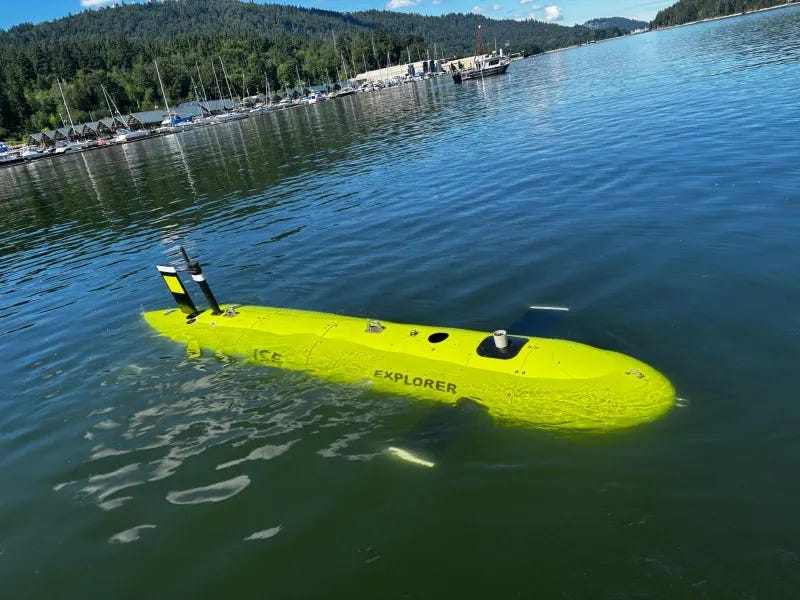
Elbit Systems Ltd. has completed the acquisition of International Submarine Engineering Ltd. (ISE), a Canada-based company specializing in advanced autonomous underwater and remotely operated systems for the maritime domain. The acquisition was completed for a purchase price that is not material to Elbit Systems.
Headquartered in the Vancouver area, ISE is a high-technology company engaged in the development and manufacture of undersea vehicles, including Autonomous Underwater Vehicles (AUVs) and Remotely Operated Vehicles (ROVs), as well as computer control systems and robotics. With more than 50 years of experience in subsea robotics, ISE has delivered over 250 underwater vehicles to customers in more than 20 countries worldwide.
Elbit Systems’ naval portfolio includes unmanned surface vessels, underwater systems, integrated command-and-control (C2) suites, electro-optical and sonar systems, communications and electronic warfare technologies. Through its subsidiaries and global centers of excellence, Elbit Systems delivers proven naval capabilities supporting missions ranging from coastal security to blue-water operations.
The addition of ISE’s underwater autonomous technologies is intended to expand Elbit Systems’ capabilities in underwater Intelligence, Surveillance and Reconnaissance (ISR), Mine Counter Measures (MCM) and Anti-Submarine Warfare (ASW), further strengthening the Company’s end-to-end maritime offering.
Bezhalel (Butzi) Machlis, President and CEO of Elbit Systems: “This acquisition marks another milestone in Elbit Systems’ strategy to expand its offerings in the naval domain. Combined with our existing capabilities in naval electronic warfare, autonomous systems, naval precision munitions and maritime mission systems, ISE’s underwater technologies will further strengthen our position as a global provider of comprehensive, integrated maritime solutions.”
Noah Note: Wow, just wow. This is not what I was expecting to read today. Full disclosure, it's been an open secret that ISE has been on the market. There were also rumors they had sold, but I didn't expect it to be Elbit of all people. It's a bit somber, honestly. ISE is beyond a Canadian company.
They are of of Canada’s Autonomous pioneers, the Grandfather of the modern UUV and Undersea Autonomy Industry. They are a crown jewel of a company for which almost all of Canada’s UUV industry descends from, from Cellula to Kraken. They are the people behind Theseus and Project Spinnaker, one of Canada’s greatest feats of this kind.
They are a quiet company, admittedly. I have never spoken to them, and they seemed content to keep to themselves. We wrote a history on the company last year, one I will repost here for those interested.
Canada has long been a pioneer in the AUV/UUV space. It's why I'm confident that we will see a Canadian-made solution. It's an industry, and history that we have rarely discussed at length here, or anywhere really. This is in spite of Canada, and Canadian companies being the leader of this space for decades.
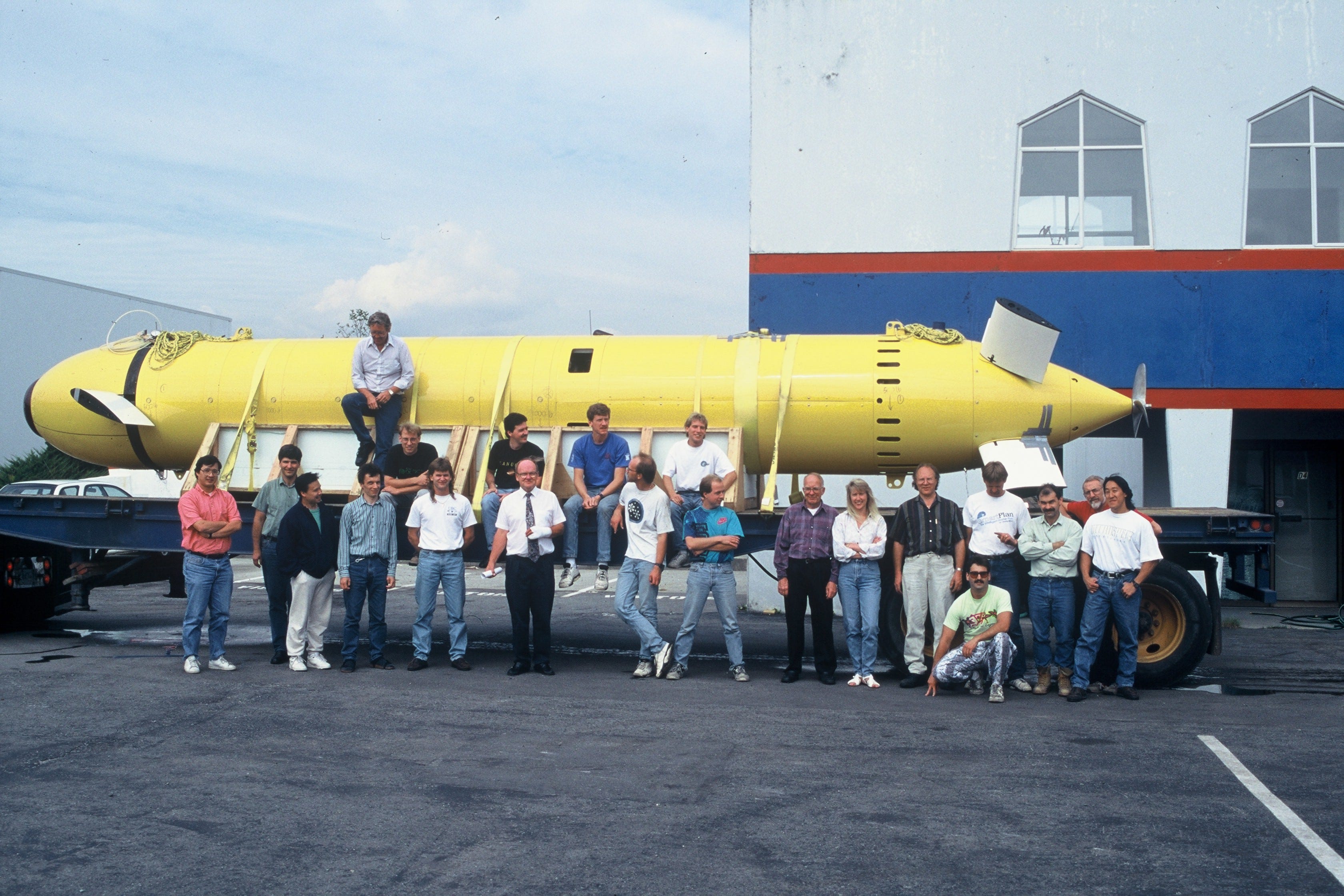
Canada’s path into unmanned underwater vehicles began long before most of the world even had the affinity they do now for them. In 1974 International Submarine Engineering (ISE) was born.
Within a year they had produced the first commercial ROV in the North Sea, a stubby, tethered platform designed to work where divers couldn’t. By the late 1970s they’d fitted it with a manipulator arm, and the logical next question was simple: what if the vehicle didn’t need a tether?

By 1981, they had developed their answer. The Dolphin was unlike anything else built in North America, a semi-submersible, diesel-powered AUV that could operate for hours on its own, performing offshore surveys or mine countermeasure tests. In the same period, the United States was still experimenting with tethered systems, and the British were just beginning to draft concepts for what would later become Autosub while ISE’s engineers were already charting seabed profiles autonomously in the Pacific.
They were already pushing the boundaries for what an AUV could do, and in turn would be setting up the next three decades of developments.
The real leap came in 1983 with the Autonomous and Remotely Controlled Submersible (ARCS). Small by modern standards but revolutionary at the time, ARCS could navigate without surface control, recognize and avoid obstacles, and operate for ten hours at depth.

Its inertial navigation and Doppler sonar suite would become the blueprint for nearly every AUV to follow. By 1986, ARCS had logged more than 800 dives, experimented with a prototype aluminum–oxygen fuel cell that kept it running for over a day, and served as a test platform for Canada’s Defence Research Establishment Atlantic and Johns Hopkins University’s Applied Physics Laboratory.
Then came Theseus. At the height of the Cold War, when under-ice surveillance was a matter of strategic necessity, the United States and Canada launched Project Spinnaker, a plan to deploy acoustic listening arrays beneath the Arctic Ocean. ISE was contracted to design a vehicle that could do what none had done before, to travel hundreds of kilometres under solid ice, laying fiber-optic cable as it went.
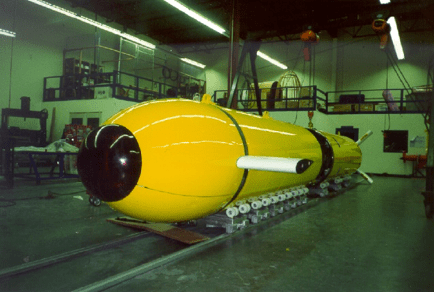
The result, completed in 1992, was a 10.7-metre, 8-tonne AUV named Theseus. In 1995 and again in 1996 it dove beneath a 2.5-metre-thick sheet of ice at Resolute Bay and laid two 220-kilometre cables. It stayed down for more than 60 hours at a stretch, a record at the time. Britain’s vaunted Autosub wouldn’t achieve comparable missions until five years later.
We had built something that had done the impossible, something that now almost thirty years later UEA hopes to achieve once again. It didn’t stop there though.
While Theseus was laying cables under the ice, ISE’s Dolphin series was evolving into a mine-hunting platform. Two units were acquired by the U.S. Navy under a DARPA program during the Gulf War, equipped with Klein side-scan sonars and used to test remote minehunting from surface ships.
In 1995, a Dolphin operated alongside the destroyer USS John Young in one of the first ship-launched AUV trials. The success proved that autonomous mine warfare wasn’t a distant concept, it was already here.
From a Vancouver warehouse had come the DNA for some of the most capable underwater systems in the world. By the time other nations began to pour billions into autonomy and subsea warfare, Canada’s engineers had already done most of the hard work. ARCS had mastered obstacle avoidance in 1983. Dolphin had proven remote minehunting was viable by 1991. Theseus had conquered the Arctic in 1996.
Every modern undersea system carries a piece of that legacy.
This will no doubt be an emotional day for some. It is… weird, I guess to imagine them sold to someone else. For Elbit, bringing in ISE puts them on a significsnt stand as it comes to it's Undersea business. The company also owns Geospectrum Technologies, the folks behind things like the Towed Reelable Active Passive Sonar (TRAPS) system, C-BASS transducers, Jaeger USV, and M670 HMS.
Adding on a UUV developer fills a critical gap the comoany had in their Canadian ecosystem, and brings them an established, proven line of AUV like their latest Explored, ROV, and Semi-submersible platforms like the Aurora Towfish under their family.


It also brings their manufacturing experience, their in-house autonomy stack, and their autonomous docking systems under their banner. Iam just under such genuine shock by this development, that I feel like I need to take a moment to catch my breath. It's hard for me to really say how I feel, because on one hand, this isn't a surprise. Again, the rumors of them being on the market are far from new.
Yet to actually hear it, to read it feels a bit out-of-body. It's the end of an independent giant, end of an era in a way I guess. ISE gave more to Canada than most, eith little recognition from anyone for the work they did and the innovation they brought to the table. I just hope that legacy is remembered instead of being lost in an acquisition.
Not trying to put words in your mouth, Noah, but I think I share some sanguine feelings when an international company buys a domestic one, particularly one with significant history.
On one hand, it's part of the bargain of being a market-based economy and acquisitions go in both directions, with Canadian companies and pension funds surely buying companies abroad that carry equivalent domestic significance.
On the other hand, it's difficult to see a domestic company absorbed into a foreign one and leaves bittersweet recriminations of how things could have been done differently over the years.
I don't have strong opinions or a ton of knowledge about Elbit, but it does seem like they have a broad-based network of divisions and subsidiaries around the world that seem to do real engineering and manufacturing, and not simply corporate outposts in key markets.
The loss of control over hard-won IP, much of which was surely the beneficiary of government R&D support (direct and indirect), and greater likelihood of Elbit transitioning the ISE product line that it opts to retain over to its own exquisite components and software will have a negative knock-on effect on the domestic defense sector.
On the positive side, Elbit is surely placing its bets on how to position itself as the best-in-class developer and OEM for the UUV facet of the unfolding revolution of military affairs defined by remotely controlled and autonomous systems. If the corollary to this is that the acquisition of ISE was judged by Elbit as a strategic move that materially helps it realize this goal, this could bode well for the Canadian defense sector.
For what it's worth, Elbit was a forerunner of the current generation of tactical and MALE ISR UAVs with the development and commercial success of its Hermes 450 platform in the 1990s that has had uninterrupted development to this day. Transport Canada is acquiring the Hermes 900 StarLiner, for example, for the National Aerial Surveillance Program of detecting marine pollution, observing sea ice, monitoring shipping activity, and supporting Arctic surveillance.