


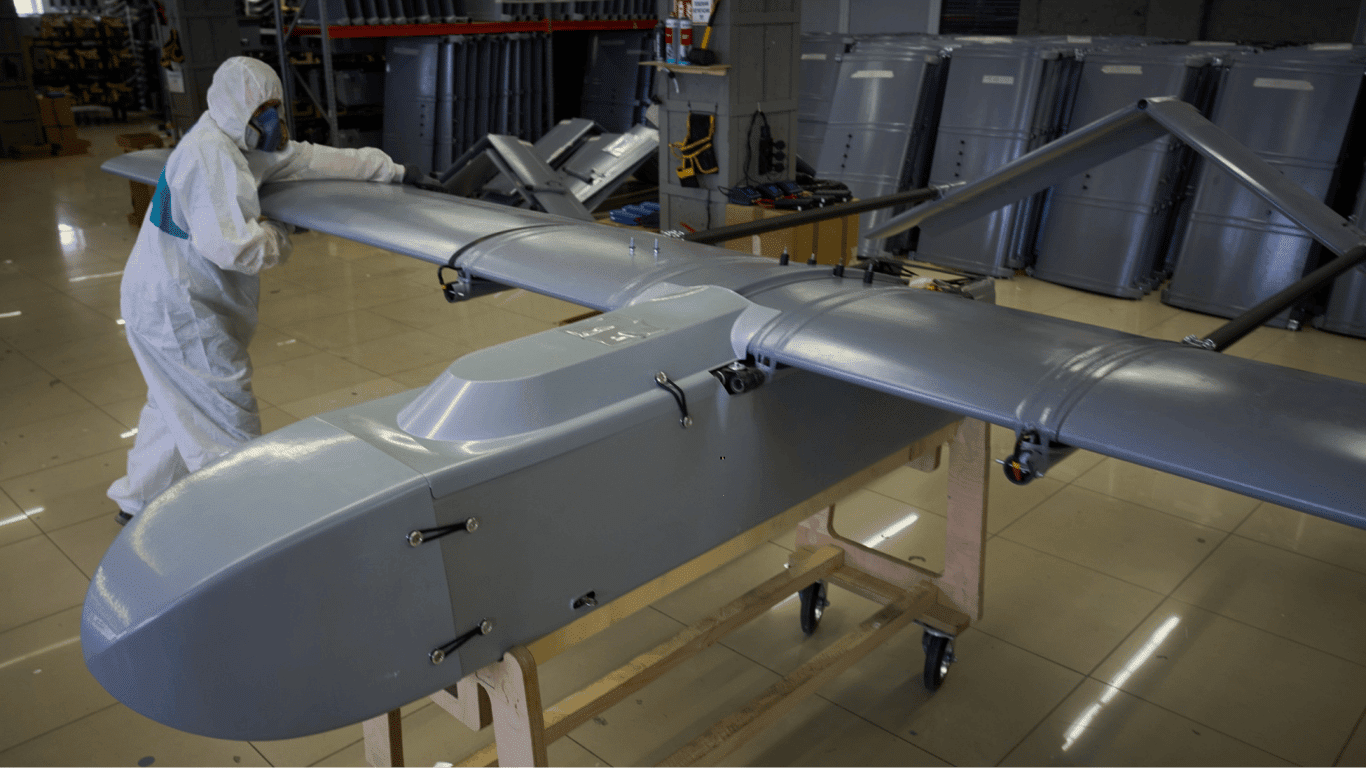
On Thursday afternoon, with no news release and no notice, the folks at the DND stealthily dropped both a new project and a full requirements list for a new class of long-range strike systems first teased last week to us. Now, stealth dropping is nothing new, but considering the capability being discussed? Shadow-dropping this with little notice on a Thursday afternoon is certainly a bold choice to make.
This new project is the Canadian Deep Precision Strike Capability or CDPSC. Led by the Joint Forces Command, it aims to deliver a long-range precision strike capability that can be fielded quickly and sustained at scale, building off the Deep Precision Strike stream we just talked about as a relative unknown last week when the DDIM dropped.
Deep Precision Strike was the only area in the DDIM backgrounder carrying a caveat about additional technical, operational, policy, legal, safety, and security work, with no acquisition decision announced. CDPSC seems to be the follow-up engagement promised in the initial release, with a much quicker timeline than I or likely many were expected to see run. I certainly didn't expect to see its own engagement track running in parallel with the DDIM.
With this new drop, we are getting our first solid look at what is desired out of a Canadian Precision Strike capability at scale. The scope of the initiative covers acquisition, training, logistics, integration with existing command and control infrastructure, and a very healthy focus on capacity building for a wartime scenario, a munitions stockpile program wearing a capability project's clothes, so to speak.
The notice in itself is aimed to inform industry about an upcoming Q&A session to take place on Friday, August 7 at Area X.O in Ottawa, a very short timescale for anyone to find themselves travelling to Ottawa, and very little warning for what will no doubt be many's first looks at Canada’s Deep Precision Strike requirements.
The government is explicit that this is not a procurement process, not an RFP, and not part of an innovation pipeline. It is, to quote: "focused, rapid technology acceleration initiative." Despite that, the page does give us just enough information to craft a basic picture, giving us a first look at what the CAF wants, in enough detail to reverse-engineer at least the basic concept. So let's try to figure this out.

The Requirements
The CAF wants a system that can strike targets at ranges beyond 500 km while also remaining effective at shorter ranges. The system must be capable of carrying a payload of more than 100 kg (excluding fuel and sensors). It must survive an electronically contested environment without constant command and control and without depending on GNSS.
It needs deployable launch options, should consider swarm integration, must plug into CAF and allied targeting processes, and has to support scalable, sovereign production and sustainment. The exact objective figures for range, payload, and accuracy are being withheld for a later stage, not a surprise when considering the fact that what exactly the CAF wants is likely still on the drawing board. Again, this is not an official procurement at this time. This upcoming session is to engage with industry on capacity and potential solutions available on the market.
Key areas of interest include:
Uncrewed Aerial Systems (UAS)
Long-range autonomous systems
Precision guidance and navigation
Alternative Position, Navigation, and Timing (APNT)
Communications and datalink technologies
Software-defined systems and autonomy
Artificial Intelligence (AI) and computer vision
Modular payload integration
Advanced manufacturing and rapid production
Counter-electronic warfare resilience
Mission planning and command-and-control software
Launch and recovery systems
Training and simulation technologies
To clarify, because some will ask and likely try to insert, this is a drone project. The word missile appears nowhere on either page. The key areas of interest have been definitively set with autonomous systems exclusively in mind at this time. I won't be getting into hybrids here, because that gets a bit more complex. What this describes is a Canadian-manufactured, scalable, autonomous system able to support precision strike.
The 100 kg floor is also a notable decision, and it hypothetically puts Canada above the Euro consensus of what class of effector to prioritize. Europe's multinational answer to this problem, the six-nation One-Way Effector program signed under the European Long-Range Strike Approach in February, settled on a roughly 50 kg-class warhead to start things off, with plans to move higher elsewhere.
Canada is also not among the signatories of the new Deep Precision Strike Capability Investment Initiative, launched at the NATO summit a few weeks ago. So we are distinctly staying away from existing multinational programs that could fit at this time, at least for now. Germany's own Deep Precision Strike program is likely the existing program that most closely matches. The Bundeswehr has commissioned IABG to assess four candidates—Destinus, Diehl Defence, Helsing, and MBDA Deutschland—for low-cost, mass-producible strike systems with range beyond 500 km. They're also looking at 50 kg, though.
MBDA DELUGE OWE, already under contract, carries about 40 kg to 500 km. Most of the Ukrainian systems sit in the same range: Antonov's Liutyi at 50 to 75 kg, the AQ-400 Scythe at 43 kg, and the Shahed-136 itself at 50 kg. Every one of them fails Canada's payload gate.
The global effectors boom has clustered deliberately below 100 kg payloads. Warhead mass drives airframe size, engine class, and unit cost. The question remains if that is a warhead requirement, but right now how that payload is distributed and the expected use case of it remains the critical factor here. The CAF seems to prioritize a larger, more high-scalable system out the gate over starting small and working up. Whether that's the right trade is a fair debate; what isn't is that this is a deliberate tradeoff.
The requirements of such a system are yet to be seen, and I do suspect that the choice of this payload class might be done less from a pure warhead outlook and more hunting for a common platform for both OWA, ISR, etc. The fact that modular payload integrations and recovery systems are a named area of interest makes this read less like a Shahed clone and more like an attritable, multi-role platform that gets expended when the mission calls for it.
That does shift things a bit, but that is just my personal inference. I can't say if that's the mentality they have, but I do have it as a personal working theory. It could also be that we look at multiple different platforms and capabilities.
However... the DDIM is explicitly looking into both one-way systems and attritable systems as listed capabilities to be explored, so we can't necessarily rule out that we could be looking at a larger OWA system either. For the sake of simplicity, and given how things are looking, I'm gonna treat this as a one-way effector over anything else, at least until more info is out there.
Of course, those numbers remain the most important piece that makes or breaks for many. What are the objective range and payload numbers, and is the 100 kg floor a warhead requirement or a modular payload requirement? Is recoverability in scope, or is this a pure one-way effector? Whatever combination, the answer roughly doubles or halves the candidate field.
In this regard, there are few Canadian systems that immediately clear this. On the high end, the combination of payload, range, and capability puts this outside most of the major platforms we see from Canadian manufacturers. A few commonly discussed heavyweights, Volatus, UVAD, ARA, Sentinel, Aeromao, Draganfly, InDro, Landing Zones, etc. are all classed out by such a high payload requirement, at least to what I know.
Maybe some of them have something sitting somewhere, in a desk or drawer somewhere? If they do, I have not seen it. Effectively everyone in the playing field is knocked out without a major product hiding, and given the apparent rapid desire to procure systems here? It would be very likely that we would need to be looking at licensing existing platforms to fit that gap.
The foreign systems that clear this form a short list, definitely not full of options if we do want a 100 kg system, which again I am not convinced is what's wanted, but it's still interesting to look at the field.
While still contentious and a bit weird, there are still Ukrainian opportunities on the table that could fit this, if you accept the current frameworks they have in place. Going back to DDIM, the RFSA specifically asks about systems that "is currently in use in Ukraine or informed by operational lessons from Ukraine."
So very clearly, the licensing of Ukrainian systems, or at least systems utilized in Ukraine, is something that they ain't exactly ruling out; in fact, quite the opposite. As such, I feel it appropriate at this stage to toss them in here.
Fire Point's FP-1 has a reported range of 1,600 km, a modular payload up to 120 kg, is integrated with optical sensor pods, and has a reported unit cost around US$55,000, with more than 5,000 built per the company. It is the cleanest match to the spec as written, assuming we're looking at an OWA system.
The FP-2 could also fit this in the future? I believe its range is under 500 km, but future variants plan to expand upon that in the future. The FP-1 fits almost perfectly as is.
Beyond that, Ukroboronprom's Palianytsia sits exactly at the line: 320 kg takeoff weight of which 100 kg is the combat unit, 650 km at 900 km/h off a turbojet with a solid-booster launch. It falls, though, into that hybrid category we talked about earlier, possible but doesn't seem to be what we want.
Above them, the class jumps to Ukraine's Flamingo and France's Chorus, carrying 500 kg or more to 3,000 km. That's the field, and the thinness is the point. Asking for a pure 100 kg warhead OWE is inherently asking for a very niche, very limited field of products that we just don't do, that many just don't really do.
And that kinda circles back to the thing here. We kinda have a few conflicting concepts here, and right now what is actually desired is left in a weird limbo. We have clear mandates for one-way effectors listed in DDIM, and when we talk about autonomous, deep precision strike we are oftentimes discussing these systems even if not said directly.
However, the current discussion remains open to modular payloads, recoverable and reusable systems. If we're being technical, a drone carrying long-range munitions is also more than capable of fulfilling the long-range strike requirement while still being expendable and stockpilable at mass. That does require the added need for stockpilable, scalable strike munitions to be paired with such systems.
That's why we lean deeper into one-way effectors. While it's possible for a larger UAS to be utilized, perhaps integrating long-range munitions or even air-launched effects for precision strike at depth, the common and easiest path to take here is either talking about a one-way effector, a very weird, potentially reusable strike system, or a common platform that could be rapidly configured to multiple roles. All of which are viable at this time.
Confused? I am. It's a very specific list of vague requirements that immediately can be fit, but how you fit it depends greatly on how you perceive the requirements. We're also working off generalist numbers, and so we're gonna be limited until we get a proper breakdown on how things are planned to work and how those numbers break down.
Right now I don't know, and it's entirely possible we're gonna see multiple manufacturers, multiple systems procured through DDIM for this category, and maybe these requirements are left open enough to allow the DDIM maximum variety at this early stage. That is something that makes sense going in knowing you're likely to procure multiple solutions that might not all follow the same philosophy of how they execute long-range precision strike.
Regardless, we will know more next week. I won't be attending, but I know I'll hear about it. I just hope there is more to share next week, and perhaps a better look at exactly how the CAF wants this to work. Until now we have some basic requirements, and a good idea of what it could be, and that is fine for now.
This, but paint it grey: https://www.horizonaircraft.com/
FP-1 Maximum payload
UP TO 60 KG
Operating range
UP TO 2600 KM
Maximum flight time
7 H
FP-2 Maximum payload
UP TO 105 KG
Operating range
UP TO 200 KM
Maximum flight time
2.5 H
Just for info