



BURNABY, BC, Aug. 26, 2025 – Cellula Robotics Ltd. is pleased to announce a sale of a GUARDIAN AUV to a confidential defence customer.
Guardian is a commercial off-the-shelf Autonomous Underwater Vehicle designed for ultra long-range missions. Capable of up to 5000-kilometre missions, it can release payload and off-platform assets with precision enabled by hovering and station keeping capability. Guardian can be deployed from ship or shore and is easily transported in a standard 40 ft container. Measuring almost 12 metres long, with a 1.7 metre cross section, Guardian is the largest of Cellula Robotics’ AUV products.
Richard Mills, CCO Cellula Robotics, said: “We are honoured to be chosen to deliver a Guardian AUV system. Capable of long range survey, surveillance and payload delivery missions, Guardian represents the next frontier in over-the-horizon underwater autonomy, not just gathering data but delivering capability.”
About Cellula Robotics
Cellula Robotics Ltd. is an international, privately owned, world-leading marine technology company focused on revolutionizing underwater security, survey and science through advanced, modular, long range AUV systems and resident subsea sensing capabilities. Headquartered in Burnaby, British Columbia with additional offices on the East Coast of Canada, the United States and the United Kingdom, Cellula employs over 80 dedicated professionals, including highly skilled engineers, designers, and technicians.
Noah Note: Wow. Congrats to Cellula on this sale! They also received a new contract from DRDC this year for further testing of Guardian in the Arctic. 12m in length, with a 45 day endurance and nearly 5000km range, the Guardian AUV is one of the largest and most capable AUV developed in Canada.
Its the likely basis for the Underwater Enviornmental Assessment (UEA) project, part of the wider Canadian Arctic Sensor Suite (CASS) project. The UEA project aims to acquire a fleet of XLUUV optimized for Arctic and Under-Ice surveillance. These will provide the RCN with an autonomous, long-range, under-ice surveillance capability for monitoring and surveying the Canadian Arctic Archipelago.
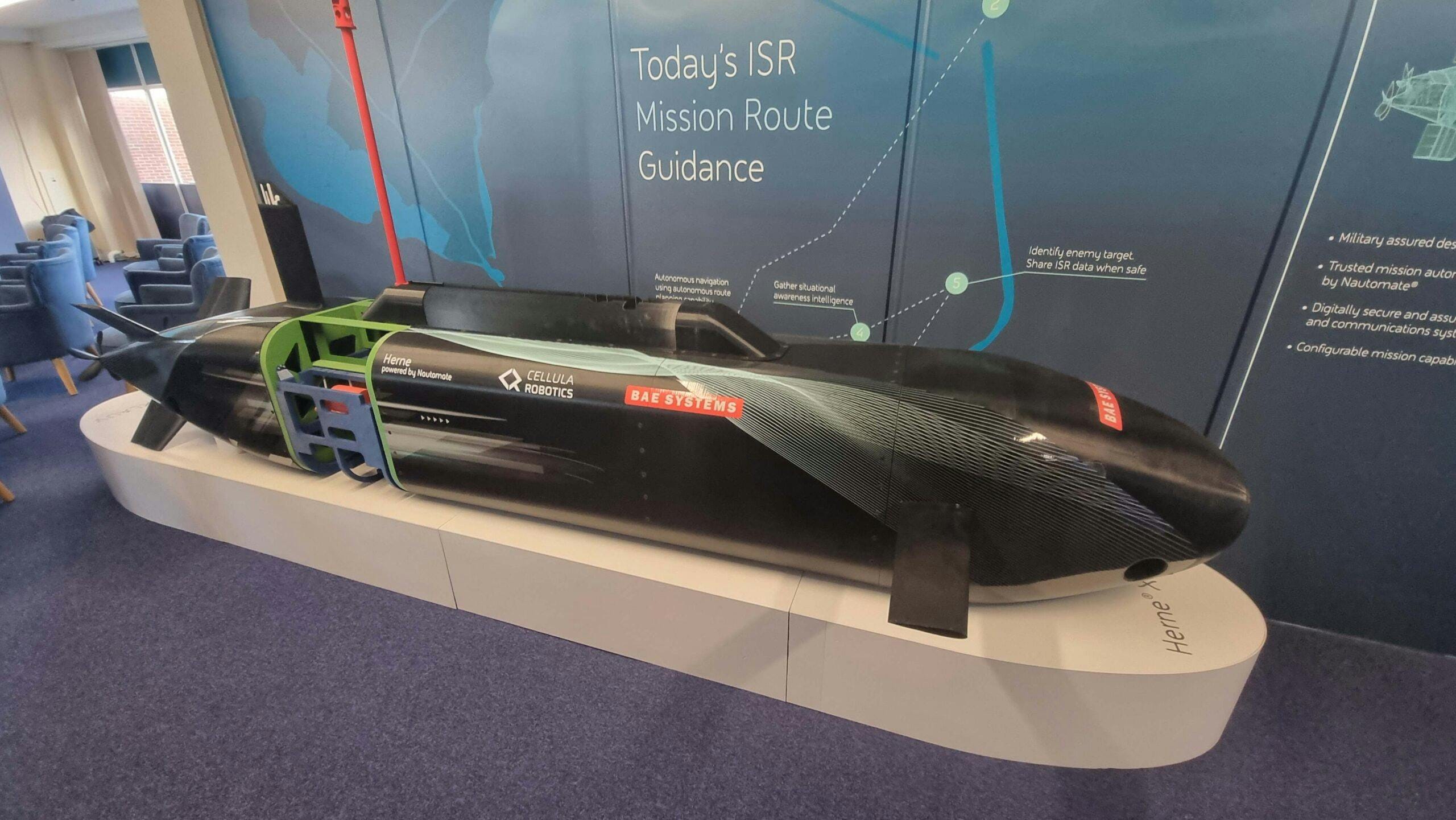
It is also the basis for BAE Systems Herne XLAUV, which is essentially a Guardian AUV that BAE has modified with their own software and systems.
The project will be paired with the Rapidly Deployable Fixed Array Sensor (RDFAS) project, which will acquire autonomous sensors able to be deployed by these XLUUV. These sensors will supplement traditional fixed sensors, allowing the XLUUV to deploy a sensor ‘barrier’ at strategic chokepoints in the Archipelago.
These sensors will provide a network of triggers that will be able to persistently monitor for things like Submarines without needing a large, manned asset or expensive fixed infastructure.
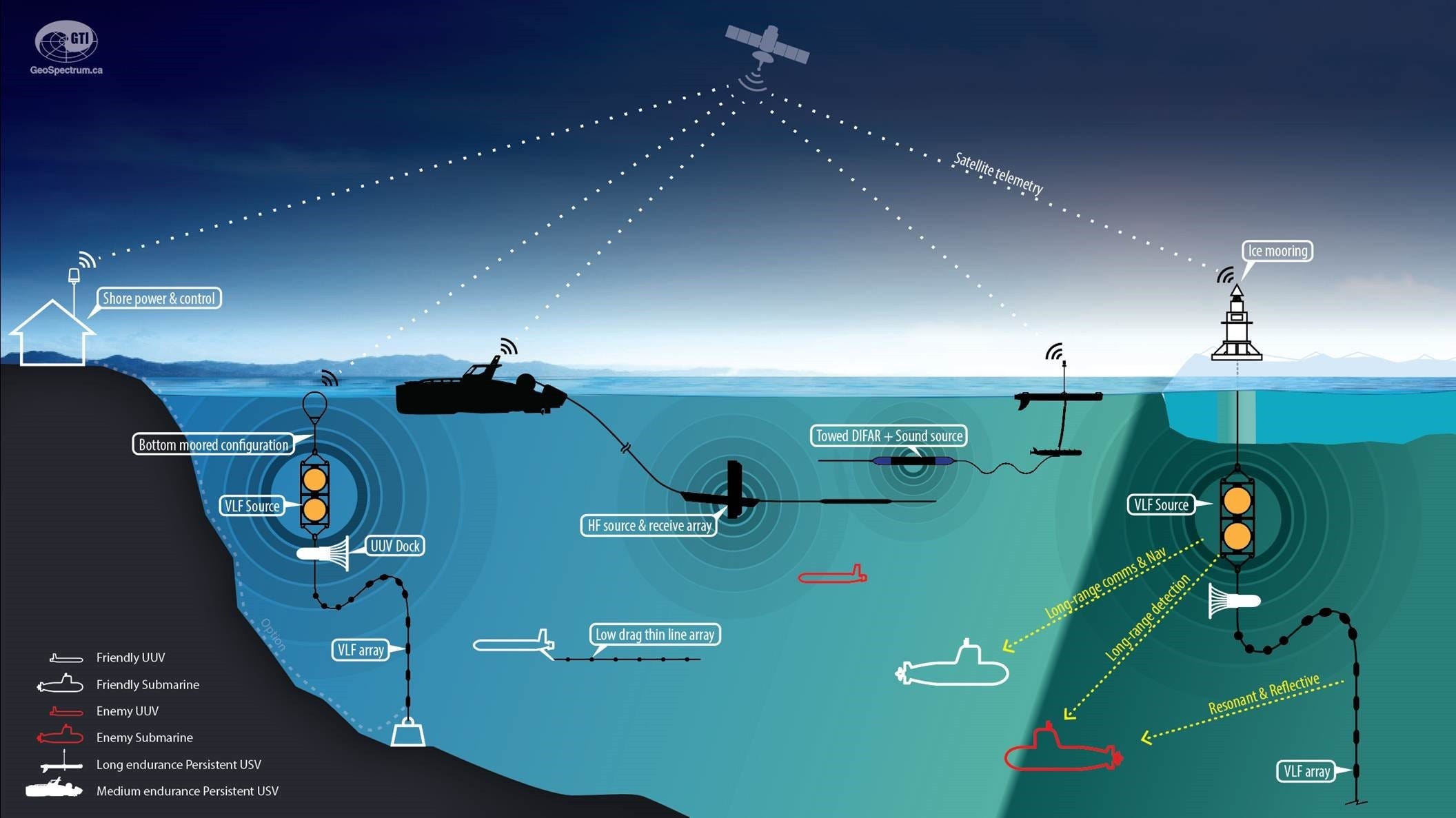
That isnt to say we won't see future fixed systems. Geospectrum, for example, has a concept that relies on moored stations and fixed shore-based facilities that act as VLF relays and charging points for AUV. Cellula has also been working on autonomous docking stations, allowing AUV to swap batteries and charge without needing to return to a shore-based facility or vessel.
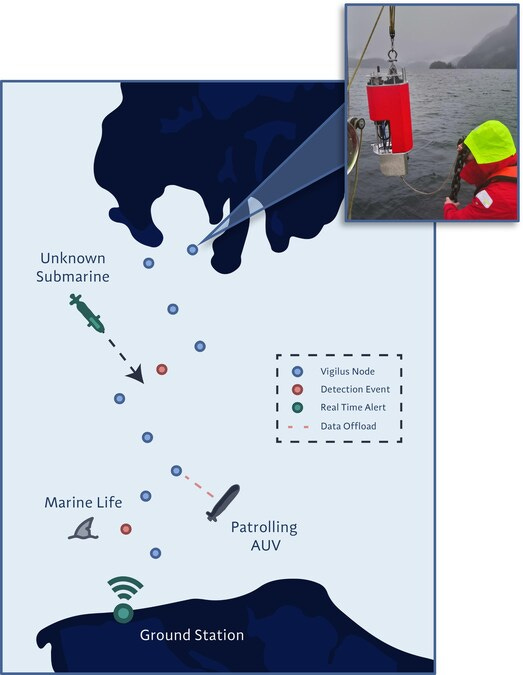
Cellula has already been working on this concept for a few years, combining the Guardian AUV with their Vigilus Nodes to form, as they call it, a fence at key points in the Arctic. Of course the value of these XLUUV extends far beyond the Arctic, but that is the current focus.
The project is currently in the early works, with contracts not expected until the early-mid 2030s last I heard. Hopefully that can be moved up. As many of you know I am a big fan on autonomous systems, and I have high hopes for their capabilities, especially in the Arctic.
Cellula also makes a range of other, smaller products, such as the River-class Mission Bay compatable Envoy AUV, Subsea Warden compact AUV, and Subsea Sentinal sensor system. All of which are designed to operate in a layered, autonomous subsea network.
No ides the interest in some of these other products from the navy, but they're done testing with all of them, so it isnt an unknown. I find them all extremely cool myself. Things like Envoy are an interesting case study into the potential options available for the River-class.
I know many people groan about it, especially in the context of the lack of VLS space. However given the limits of the hull, both in space and weight up top, the Mission Bay will become a critical area for rapidly on-boadring and adding capabilities to the River-class.
With CDC already looking hard at options for modularity, and the history of experimenting with containerized systems like TRAPS and now RMDS, we can expect the Rivers to be heavily invested in containerized systems in the future.
That includes the deployment of autonomous systems, like USV amd AUV, both small and large. However, that is a conversation for another day.
For now we can give some congrats to Cellula. They have been working hard, and the people there are all wonderful. They deserve this win. It is also a show of confidence for Canadian industry that they are able to secure these kinds of foreign contracts even without a buy of confidence from CAF or the Canadian government.
So congrats to Cellula, and hopefully this is the first of many contracts to come!