


When discussing the topic of Canadian defence, one subject will always find itself at the forefront of conversation, and that is production.
It is, of course, a very importan,t topic that needs to be discussed. There is no warfighting without the industrial capability to support it for a sustained period.
Often when getting on the subject though, there tends to be a slant towards discussing higher-end capabilities, and sitting around the table proclaiming what we could have had if X didn't ruin things, or if we took people like Saab at their word.
These kinds of discussions make defence production a hot topic within our little community, but beyond that, a large part of our procurement system plants to the simple question of how do we develop this industry and provide Canadians good paying jobs?
The ITB system is the cornerstone of this policy, setting out the rules and standards for companies wishing to bid on CAF projects. It is, one would argue, the most important factor in the final decision.
But I am not here to talk about procurement reform or the broken system. That is a topic for another day, instead, I want to take a more narrow focus and explore how we can reform our industrial policy, away from the more complex topic of procurement reform.
Canada has all the potential to be a major supplier, not just to our allies but to the foreign market. We have all the ingredients in place, but how can we take them all to make something special? Something that we can call our own?

The current state of defence production
Stuck... that is the word I've commonly heard when discussing the current state of our defence industry, and one I think shares a lot on the current mentality.
It has been almost three years since Russian forces first crossed into Ukraine, the beginning of the current shift we have seen in our defence attitude. There is no doubt that Ukraine has not only taught us many lessons on how a modern peer conflict will be fought but also exposed the weaknesses in the collective West's defence industries.
This isn't to say there were no signs, nor discussion on the risks, but the Russo-Ukrainian war has undoubtedly pushed those issues to the spotlight and has sent everyone into a collective realization that the current system is insufficient for even any prolonged conflict.
Ukraine, at its peak, was firing around 10,000 artillery shells per day. A staggering amount for any Western country, save the few outliers such as Turkey, could hope to be on top of.
The United States itself currently plans to reach 100,000 by the end of 2025, after years of struggling with defective casings, stalled production plants, and shifting supply chains.
Former Vice-President of the European Commission, Josep Borrell spoke last January on the topic as well, claiming that Europe was on track to produce a similar amount to the United States, around one-and-a-half million shells this year.
So where is our dear Canada in all this?
Well, as I said, we are stuck. Manufacturers wait for support and orders from the Canadian government to ramp up production, even two years on from the first promises to support the industry in upscaling.
In fact, the only funding seen so far has been a meager 4.5 million dollars announced back in March by Minister of Defence Bill Blair to allow manufacturers, IMT Precision and General Dynamics Ordnance and Tactical Systems-Canada to begin work on proposals for how they plan to expand production.
Meanwhile, IMT on October 2nd cut the ribbon on two new 155mm production lines for the United States, with one being for the standard M795 and the other being the future M1128 shells, the United States' future 155mm round of choice.
These new lines will have the ability to produce upwards of 15,000 new shells, almost three times the often touted 5000 shell number seen thrown out by the current government.
And while IMT plans to also launch a new production line for Canada, it is still waiting on the government to give it the signal to begin work.
Even with a future production line producing a potentially similar number, combined with the rest of the United States and Europe, this is still only about half of the 4.5 million shells Russia alone is expected to produce next year as new facilities come online.
That's almost double what we can collectively produce, without counting other supporters, such as Iran or North Korea, both of whom have extensive capabilities in Shell production.
And while this might seem mundane, to focus only on one specific type of munition, it highlights the dangerous trend we as a collective have been following for the last two decades.

We learned yesterday that the United States, as part of Operation Prosperity Guardian, had expended a year's worth of SM-3 production, and about half a year's worth of SM-6 production in countering Houthi drone and missile attacks during the last year.
And while numbers are trending up, and in some cases looking to double, these are still utterly insufficient to handle the combined threats of not only Russia and China but long-term. Regional adversaries.
But at the least, I can commend others for taking the initiative, be it slow, to increase production and generate investment in their defence industries. We should celebrate these increases where we can.
We have countries like Poland, leveraging large purchases to sell local production to companies like Hanwha. We have countries like France, which is looking to push their shell production past 150,000 per year, along with increasing Aster 15/30 production towards a stated 1200-per-year goal.
These are excellent increases and a great start to rebuilding our industrial capability as an alliance. Yet Canada, dear Canada, continues to sit around, stuck and waiting on the initiative of the government, tied to a restrictive, archaic system before getting the ball rolling.
This is despite Canada's many advantages, its safe location, access to critical minerals, and a highly educated and skilled workforce. Something that should be a winning combination not just for own investment, but for foreign sources.
Of course that isn't to say we aren't doing anything. Last year, the Department of National Defence put out an RFI to establish the production of both Point Detonation (PDD) Artillery Fuzes and Percussive Artillery Fuzes with Delayed and Multi-Role (MR) options.
Fuze production is the missing piece of Canada's ability to domestically produce a 'full shot' which consists of a fuze, loaded projectile, propelling charge, and primer. The initial order is also welcomed, for a decent amount of 60,000 PDD Artillery Fuzes and 14,000 MR Artillery Fuzes total.
This is something we should commend. This is something we should be highlighting and celebrating. I wish we had more such cases as these, more than we could highlight in the last few years when it came to increased production.
But sadly, I honestly can't. It isn't there...
There's lots of talk, don't get me wrong. We have lots of that. It was only last year that ONSF set put 9.5 billion to ammunition production... over 20 years and with no timelines.
There were also promises for LAV production and further development of Continuous Capability Sustainment (CCS), which aims to support ongoing investments in capability upgrades over the in-service phase of a capability to ensure CAF equipment remains relevant.
Anyone who knows me knows that I am an optimist. I am the kind of person to give the benefit of the doubt, to wait and see what happens and what comes of policies before I start to overtly criticize them.
Yet even I, known endless defender, cannot sit here and say those things at a time of such urgency after years have been given to start a proper industrial policy and get things rolling.
This isn't against capabilities that have been acquired, which have been numerous and I am pleased with them. This isn't against projects like CPSP, which are moving at a record pace and a scale I would have laughed at two years ago.
This is inherently about missing the boat and continuing to lag on our industrial commitments not just to our allies, but ourselves. We are failing to keep pace and continue not just in commitment to infrastructure, but even to setting the proper frameworks in place, both in terms of new policies and modernizing old ones.
For Canada to be relevant and prepared, we need to start formulating what we want, and that starts with establishing both the rules and limitations of this industrial policy.
Crafting the plan
Before jumping into the actions you plan to take, you need to establish the game you are looking to play.
While there are many ways we could do this, and believe me, I have enough business school acronyms to make us all bored out of our minds, I want to keep this simple.
So today we're going to be focusing on one thing: Being SMART
This methodology, while simple, will be enough to get us through the basic, minimal framework that I'll be establishing today.
So, what is SMART?

SMART is an acronym that stands for Specific, Measurable, Achievable, Relevant, and Time-bound. It ensures that goals are well-defined (Specific), can be tracked with clear indicators (Measurable), are realistic and feasible (Achievable), align with broader objectives or values (Relevant), and have a defined timeline for completion (Time-bound)
It is the bare minimum to me in crafting any sort of plan and helps us keep our goals centered in a clear and structured framework that is both flexible and actionable.
I like SMART as it's relatively simple to understand for the everyday person, easy to use, and perfectly designed for simple tasks like this. We can use it both for creating our initial five-point plan and for expanding upon their goals later.
Along with SMART we also need to address another issue, Scope Creep. It is an all too common problem in Canadian procurement, especially when it comes to defense-related issues.
For those unfamiliar, Scope Creep refers to the unplanned expansion of a project's objectives or requirements beyond the original scope laid out. This can be caused by several factors such as a lack of proper project management, ill-defined requirements, or sudden changes in scope.
Now Scope Creep, when managed properly, isn't necessarily a bad thing. It is when it is allowed to fester, like a weed in your garden, that it becomes an issue, one that can bog down, delay and ultimately kill projects outright.
So we need to make sure that this policy is formulated in a way that helps mitigate potential Creep, both in the project itself and by future governments that might look to modify or rework policies based on their political methodologies.
So, now that we've established our framework, we can start using it to build off our policy.
S - Specific
Starting, we need to make sure our policy is specific and well-defined in its goals and outcomes. To start, let's define what we want the policy to accomplish so we can start working backward from there.
Any industrial policy needs to:
Ensure the CAF is well-equipped and technologically ready to engage in a modern peer-peer conflict, including NATO thirty days of supply policy and beyond.
Create a scalable, adaptable industrial base that can support not just Canada but international partners while also setting the stages for the next industrial policy
Foster an environment of innovation and cooperation between Industry, Canada and International partners
Canada needs to be ready, willing and able to stand with our peers as an industrial power if a wide-scale conflict breaks out. We need to start working under the idea that we not only have to satisfy our needs but also be ready to support our allies in the event their industrial capability is degraded.
These three points give us a good starting set of specific goals that can be further defined as we move down the SMART framework. We want to be firm, but also leave the policy open.
It's a fun system of finding balance, one that often becomes the hardest part of formulating a project. If you aren't specific enough, you risk losing sight of the policy's intended purpose and introducing scope creep.
There is also such thing as being too specific, to set and firm in our goals that the policy becomes overly complex, bloated, and unable to adapt to and mitigate issues that might arise.
These policies can be a decades-long endeavor and need to be able to adapt to a world of rapidly changing technologies and threat environments.
It's a common issue, as I said earlier. You can take a look at a project like GBAD, one that has gone on so long, and was so specific in want, that the project now needs to be broken up and relaunched to deal with a change in tempo and requirements.
We don't want that here, and I find these three goals are just specific enough to avoid both sides of risk. They also leave room for the rest of the framework to fill in the more specific details, instead of hampering them.
M - Measurable
We've already started to establish our Key Performance Indicators before getting to this point. There is an infinite combination of potential to play with here, and truthfully, I could probably do a whole post about what these indicators might be.
A true policy needs to ask questions. It needs to pick which areas to focus on and avoid spreading itself thin trying to achieve too many things at once. Are we looking at boosting the percentage of domestically produced products in CAF? Focusing on increasing the number of suppliers? Or perhaps boosting our defence exports up by a certain amount?
A policy like this will have dozens of major and minor KPIs to achieve over its lifetime, while also preparing for the next industrial policy that will follow it. You need to lay the foundation for either the next policy or maintaining what has been achieved.
For me, an opening policy needs to focus on building up our capacity and supply chain. The first policy needs to be reserved, to focus on building the foundations of industry. This is often where these discussions fall off.
One only needs to look at the National Shipbuilding Strategy to see how having ill-defined indicators can damage both the reputation of a policy and hamper its ability to deliver.
One can use the NSS as a key example of a policy that has struggled to be SMART, with loose definitions of success, unrealistic timelines and too many, conflicting measures that it is still, decades later, trying to fix.
We don't want that for the next policy. We want to learn from the lessons that NSS has taught us. This isn't me calling it a failure, far from it. I am a big supporter of the strategy and believe that it will end up being a game-changing success for Canada and her shipbuilding industry.
Yet every failure, every issue takes a bit of that away. It takes longer, is more expensive and ultimately isn't able to deliver all that it could have, even if it ends up a win.
That is why we need to avoid overloading ourselves with too many, to ambitious goals. We want to be reserved, and I know that is difficult, as many will be quick to push for big industries and big platforms right away, topped off with big goals to show off.
By keeping ourselves restrained and focused on building the foundations, we allow future policies the room to grow our industry at a time when it is truly ready to take on the big challenges.
A - Achievable
This is the perfect place to move on from Measurable and onto our next topic - making sure this plan is Achievable.
We already went over it a bit before, and to many, this feels like a no-brainer. Any sort of policy needs to make sure we can achieve what we want.
This one might feel like a bit of a waste. Are we not doing that with every other part of SMART? Isn't the outcome of the whole plan to make sure this plan is Achievable?
I often find, in my limited time teaching this methodology, that this is one that often gets confused and forgotten, so let's break it down.
While Measurability might set out goals, and being time-bound sets out dates, Achievability aims to ask us on a deeper level how we make that possible.
Is the budget sufficient to build or upgrade manufacturing facilities?
Are the required skills (engineers, technicians) available or can they be trained?
Do you have the industrial base or can you develop it in time?
While measurability asks us what we want to achieve, Achievability asks us if what we want is feasible. Even if you have a crystal-clear target, it won’t matter if it’s not realistically attainable.
We don't want to put the cart before the horse. It is something that CAF has been plagued with time and time again, oftentimes leaving measures and goals up in the air while pushing the needed steps to make them feasible to the side.
Don't have enough sailors to man all your vessels? Or enough pilots to fly your jets? These seem very simple, but often, across the board, questions like these are asked and pushed away without proper solutions.
Whether locked in studies, committees or simply ignored, it is a time-tested issue that we seem to always circle back to. It is one our industrial policy needs to break the cycle of, to make sure that we are clear and set in what we need to make sure our outcomes are feasible.
It's questions of critical minerals, land, people and capacity. It's a question of understanding our limitations, setting our goals, and making sure we have what we need to get there.
R - Relevant
What is an industrial policy by itself? What is any policy by itself? I often talk about having to take a 'whole approach' when it comes to our security. One can not merely look at any individual group or organization.
Each policy is a thread in the tapestry, one that needs to be interwoven together. They need to connect and support each other.
As I said before, there are questions, and those questions lead to needs, and to policies to address them. When crafting our policy, we need to make sure that we are not only looking internally, at CAF and her goals but also making sure that it properly aligns with other strategic priorities and in turn can benefit them.
You can't build capacity without the critical minerals to do so. You can't get those critical minerals if you don't have the infrastructure in place. You need to ensure each objective ties into the bigger picture—so you don’t succeed at the wrong thing.
This also means recognizing that such a policy is not just in the hands of the DND. Other organizations have an inherent stake in such a policy, from the Department of Fisheries, Ministry of Natural Resources, ISED, CSA...
Aligning our goals with others, and ensuring they can not only fit within their policies, but also help grow and foster interdepartmental relations helps keep our policy safe from government crackdown, and helps us develop additional capabilities that will help us in the next policy.
Our policy might not create roads or mines, but it creates the demand, the need for such things. It pushes the industry to meet our expectations, to help foster room for growth among Canadian businesses and innovators.
It also means recognizing that resources are finite and that we need to be careful with how we use them. When we keep relevant, we ensure that we can invest in efforts that truly move the needle, as opposed to wasting them on vanity projects or chasing grandiose capabilities.
T - Time-Bound
This one is fairly self-explanatory. Any policy needs to have clear, well-defined timelines. They need to be flexible enough to account for any issues that might arise, while also not stretching too far as to become outdated or to mitigate in theory effect.
Keeping timelines in check allows the policy to have clear end goals to focus on. It helps us create a proper system of checks and balances that can be properly reviewed by set dates, rather than by goals or loose decisions.
For a policy such as this, I believe that ten years is both a fair and reasonable timeframe to allow it to both develop and reach its KPI. The project should have two set reviews at the four and eight-year mark that allow for major revisions, refocusing and a proper review.
Having a review in year eight also gives us a chance to either add on a second phase or renew the current policy, if one wishes to transfer it from developing to maintaining. It also recognizes that the current project process in Canada is long, complex and drawn out.
Any industrial policy we undertake will take years to even get settled and properly set up, let alone produce. While future changes to the procurement process, and slashing of regulations and legal changes might help mitigate or even eliminate some of the current issues, these processes themselves can be multi-year-long affairs that the current policy shouldn't expect or plan for.
This timeline also allows us to integrate the policy with existing projects, such as the CSS, CPSP, and GBAD to name a few. All these projects are as much as a decade out, and giving the policy time to develop slowly allows for them to be integrated into the process, such as in the production of future munitions.
While the timeline might seem long for many, and while I want to be cheeky and say by our standards it's fairly short, and I could advocate for twenty, it is necessary to give the policy time to grow and work itself out.
Sometimes, you need to trust that the extra time will benefit the result. This is one policy where I think that trust is warranted.
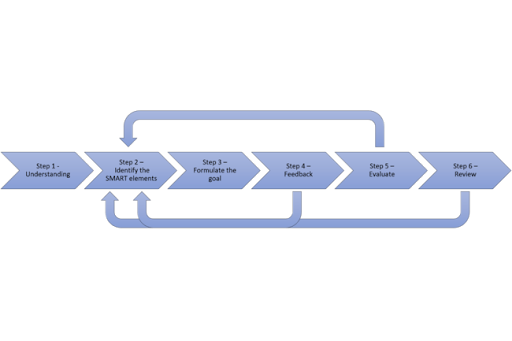
Being SMART
This might seem like a lot of basic points all thrown together, and it is. That is what makes it so simple to use. It is often these simple steps, the obvious, that we tend to neglect and miss when crafting these kinds of plans.
How much have we seen unrealistic timelines? A lack of capability? How many times have we seen reports and plans spouting off unrealistic or useless indicators?
They are common, far too common, and it is for that reason that I feel we need to take a step back from the complex and reexamine our basic principles, the basic foundations for a project that helps us set the basic stages.
Once we have answered the questions that SMART asks of us we can start to take a deeper look at our goals, and what we want out of our policy. SMART lays out the foundations that we can use to govern and manage the policy.
From here, we can get to the filling, the cream in the middle. We can start to take a look at what we want out of our industrial policy, and what kinds of outcomes and reforms we want to explore through it.
While there are many ways we could do this and many things we could do, I'm going to try and throw out one proposal...
The Five Pillars
Now that we've got our foundation in check, we can begin to start building up the next phase of our Policy, the actual meat of the proposal. We know what we want, and our timelines and likely already will have a decent number of KPIs already drawn up.
For this, I am going to be taking a look at five different goals that I've arranged into separate pillars. Each of these pillars, like SMART, will act independently of each other, each operating concurrently but coming together by the end of the policies to achieve our desired outcomes.

With these five Pillars in place, we can slowly begin reforming and planning the expansion of our defense capacity. The end goal at this time is not to come out of this with a complete, fully set ecosystem, but to start setting the path to it.
This won't be easy. Each of these requires radical changes to both our mentality and ecosystem, both legislative and political, to achieve what we want. It is also why we can't rush in to this as many would wish. We gotta make sure things are feasible first, and that's what these prioritize.
So, let's once again break it down!
Building Capacity
The first pillar deals with filling the gaps in our current system, while also developing the basic supply chains needed to upscale production. This is one pillar where cooperation and interdepartmental relations are key.
The fact is that a lot of these aspects are out of the control of the DND. They can certainly try to invest in the critical minerals supply, for example as the United States does with DAPA, but its overall effect is likely to be minimal in the grand scheme.
There are certain things where the DND is instead forced into an advocacy role, one they've been willing to do, but at too small a scale to be efficient. There needs to be more work done on raising these issues with the federal government, working with other organizations such as Natural Resources to align goals and plans, and working with industry to better understand what our limits are and how the DND can help.
There is little that can be done in that realm, same as infrastructure. Railways, highways, and ports are important, and the DND does have some room to tackle these issues but is inherently bottlenecked by it being out of its jurisdiction and authority.
And make no mistake, our critical minerals are an important part of any future industrial expansion, one that we have left to stagnate and drag out thanks to overbearing regulations and a lack of urgency that has driven out investment and pushed our allies into the arms of dictators and adversaries to find these supplies.

It isn't just about use, but leverage. Canada, with her readily available supply, advanced transportation infrastructure, and highly-skilled workforce should be able to attract highly complex and adept industries here, without an overreliance on subsidization that we've had to use the last several years.
Leveraging our critical minerals supply to attract advanced industries, while also supporting our allies with Canadian minerals and gas will not only help develop working relationships on cooperation but also open the door for more advanced capabilities in our next industrial policy.
Think battery tech, autonomous systems, missiles, etc. While we already can produce these capabilities, increasing our capacity, that previously discussed finite pool, while investing in new production in things such as semiconductors, another policy to discuss, opens these doors up for more than if we stick to the status quo.
On that same note, the DND needs to work with the industry on identifying gaps, such as in the previously discussed fuzes, that currently exist in the supply chain we have. This can be things such as propellant, electronics, batteries…
It's crucial that we not only have the domestic supply to handle what we currently have, but to have a fair stockpile available to be able to rapidly expand if needed. This is especially the case in a major conflict where supply chains will inevitably be disrupted or lost entirely.
A comprehensive study into these gaps will need to be done very early on in the policy, to allow time for the industry to respond, formulate a strategy and execute.
By the end, Canada should have established a robust supply chain able to domestically handle our basic needs, support allies and be prepared for the next phase of upscaling.
Prioritizing capabilities
The next pillar will set the stage for what the actual end production will be. We need to understand our limitations and find the capabilities that, not only do we need, but can be exploited in the export market
The fact is that Canada is not big enough on its own to support major, sustained industrial expansion. The CAF, in its current plans, is not big enough to support such a large-scale industry on its own, unless we start bumping up our procurement numbers.
As such, we need to think of what things we can invest in, and what demand is there both domestically and internationally for us to exploit. While we may want to boost LAV production, how much of a priority to the policy is this if it is solely focused on CAF? In such a heavy, saturated market, is it worth it for us to invest major time and effort?
Or are we better to say, focus on ordering a continuous amount per year, say fifteen or so to not only keep CAF supplied but keep the line open while focusing on improving the fleet we have through yearly upgrades instead of pumping out larger numbers?
For these reasons we shouldn't be looking to hunt major capabilities, such as jets, tanks, etc, but instead take a more basic approach.
As I said before, I believe munitions are the key base. Our current munition supply chain is already insufficient for what we need now and will continue to fall behind as our demand continues to increase.

It is also a great industry to score key investments in and help build our industrial base, but that is a discussion for other pillars to exploit.
On a similar note, while a saturated market, Canada is also primed to jump into the Protected Mobility Vehicle market. There is international demand for such platforms, and the Industry we have, through companies like Roshel, Terradyne, Calibra, and others is well developed and already prepared to jump on it.
There are also autonomous systems, one of Canada's most underrated industries. It's often overlooked, but Canada is currently at the forefront of autonomous development for defence applications.
Companies like Kraken and Cellula Robotics are leading players in the Autonomous Underwater Vehicle market, with Cellula and BAE recently showing off their Herme AUV for the Royal Navy.
Beyond that, Canada is home to companies such as Rheinmetall, Textron and, of course, GDLS-C. All of these have selected Canada as a primary location for Autonomous development through platforms such as the Canadian-designed Mission Master UGV, MUTT, TRX and Ripsaw.
These are all platforms that the Canadian industry has had a major role in helping to create and develop, representing the best in their field in terms of capabilities.
Autonomous Systems provide a high-end industry for the first policy to focus on, already established and working, we do not need to worry about developing it from scratch, as other capabilities would demand of us.
Instead, we need to focus on attracting more of this work over the border, to being innovators in this technology. We need to be willing to accept the risk that these new technologies bring and find ways to fit them into our security infrastructure.
These are three priority capabilities that I believe Canada can, and should easily exploit. By building these basic industries, we can build both the basic supply, basic manufacturing, and high-end technologies needed for the next generation of capabilities.
Modernizing the Munition Supply
This pillar, to me, is the most crucial of the five. It is the one that is in most desperate need of reform and will set the baseline for industry to work off of.
The current Munition Supply Program is archaic, outdated and too limited to be effective in its current form. If we want our policy to work this must happen as soon as possible.
First off, the current supply has several major gaps that will hamper CAF's ability to fight a future peer conflict. This is inherent to the program being outdated, but also too limited in scope to what it wants.
Artillery barrels, Class I UAS, expanded ammunition requirements for new capabilities set to come online, and even a proper missile supply are all things that will need to be expanded upon in the updated Munition Supply Program.
These are needed supplies that, as the Ukrainians have proven, are quick to run dry if a constant, available stream is not available. They are no longer luxury items that can be acquired in set sales and waited on.
We also further need to redefine our base numbers of what we deem as critical and work with manufacturers to bump our yearly production numbers to a state that allows:
Canada to maintain her Thirty Days of Supply
Provide ample supply for training and exercises
The ability to also aid in the support of allies in the event of conflict
With these in mind, we can start to work on what numbers we might be looking at. I'm not going to pretend I know what each of those numbers is. I don't. That is a question that needs a comprehensive analysis I can't provide.
There are some numbers I would like to see though. I think that 20,000 155mm shells per month, up from our current 5000, is a good starter goal for us to undertake, and is both realistic and easy to achieve over the lifetime of our policy.
Other numbers are more complex and raise the need to open up the current suppliers. Canada needs to investigate whether it is feasible, and needed, to add more suppliers beyond the current five to the Munition Supply Program.
I would say we should encourage suppliers of capabilities to be part of the supply program. Would it not make sense to allow the future winner of IFM, for example, an opportunity to be the primary supplier of artillery barrels? Should we make that the standard?
The Munition Supply Program needs to be regularly updated to take this into account and allow for these opportunities to be exploited.
Canada should aim to create a new, redefined review system that takes a comprehensive look at the program every four years, just as our industrial policy does. This will make sure the program remains modern, relevant and able to adapt to new technologies or capabilities, such as recent advances in drone technology, more efficiently.
Promoting cooperation
This includes both industry and allies respectively. We need to recognize where Canada is limited in its ability to attract investment in its defence industry and find ways to mitigate those issues
We do not order enough on our own, such as in Poland or Egypt to justify companies setting up domestic production. We do not have the capital to invest billions in both aiding private industry in setting up and maintaining domestic production.
Lastly, we are an isolated market next to the world's largest defense industry, bar none. When a company like Hanwha sets up shop in Poland, they do so knowing that, not only do they have a great customer, but also that it provides a base to start exporting domestically to the rest of Europe.
We have exactly zero of those benefits. We are isolated, don't order enough, and don't have the major capital to attract companies to set up domestic production here.

Historically we have focused on the concept of ITB, not chasing the manufacturer themselves, but incentivizing them to invest in Canada's small and medium-sized businesses.
But the current ITB system is corrupt, ultimately controlled by the few major manufacturers that win the majority of contracts when get to pick and choose their winners.
It does not help our industry. It does not grow it. It is a closed system that ultimately works against the people it was designed to help in the first place.
Canada must promote its geographic position and potential to allies. We need to exploit our abundant resources and capabilities to supply our more vulnerable allies in Europe and Asia.
With NATO currently working on bolstering its critical supply chain, as set out last year, Canada has the perfect opportunity to promote itself as a 'Safe Supply' that can both provide critical munitions to allies, also act as a backup manufacturing hub in the event a major conflict degrades their capabilities.
Safely situated across the Atlantic, and with a more isolationist, anti-NATO government coming to power in the United States, Canada is uniquely positioned to fill these gaps for the alliance.
We need to work with NATO partners on how Canada can fit into this role, be it supplying Canadian resources, or setting up production of allied systems to better supply them in the case of conflict.
Exploiting the situation is one of the best ways for Canada to position itself as a destination for defence investment, despite all the other deficiencies that would normally lock us out.
Canada also needs to look at what companies can provide multiple capabilities, and investigate if it is worth the effort for the sake of defence production
For example, companies like MDBA can effectively provide multiple munitions, including Ground-Based Air Defence, Air-Air missiles, and Anti-Tank missiles that Canada is looking to acquire.
Should we give them priority if they are willing to create a domestic supply? Should we provide benefits to companies willing to take these leaps? Are we willing to take the risk?
These are all questions we should be asking ourselves and examining. We need to understand that, while we may not want to do such things, they might be the most effective way to get these more advanced munitions manufactured in Canada.
No matter what, we need to start being diplomatic. We need to start selling ourselves and aiming beyond the current ITB system and towards securing true manufacturing, not just parts and pieces.
Fostering Innovation
This is something I know everyone brings up. So I won't bore you and keep it simple. We need to create a better system for Canada's small businesses and innovators to take part in the defence ecosystem
We need to give CAF the ability to experiment and trial capabilities, especially Canadian-made capabilities without going through a long, complicated process. The current system makes these kinds of trials nearly impossible, locked behind Canada's burdensome procurement system.
Giving CAF more independence, both financially and organizationally, would allow them to better support Canadian industry themselves, allowing capital to continuously flow and creating an environment that knows opportunities are available.
We need more sandboxes and more challenges. We need to give IDEaS and DRDC more ability to run these kinds of trials and programs.
Fostering this environment of innovation will allow Canada's SME to take part in our Industrial policy without being reliant on, or forced to compete with larger, more established companies for opportunities.
When the time comes, these SMEs can then work on building themselves up for the next policy, when their more high-end, specialized capabilities will be in demand.
Putting everything together
If this all sounds long and complicated, that's because it is! I've been trying hard to simplify and make this easy for the common reader, but even I find it hard to do so. These kinds of policies are complex, long and oftentimes can feel overwhelming.
That is why it can be very hard to talk about them, and my example here is just one that I have quickly pieced together through an assortment of ideas in my head. The truth is there is no one way to do this sort of thing, nor do I believe that I have the optimal policy here.
The point is, that Canada needs a true defence industrial policy. We have needed one for years, and the longer we wait the more we fall behind our peers. We can't afford to wait. We can't afford to spend years looking for ways to cheap out or make everyone happy.
We need a policy. It will be expensive, and people won't be happy with it. There will be winners and losers, and sacrifices might be needed to get everything we might want. The longer we try to fight that kicking and screaming is longer we need to wait to start seeing the benefits.
We have all the tools to be an industrial power not just for us but our allies, but it will be a long, slow process, and that is okay. Sometimes it isn't about getting to the finish line but getting the ball rolling.
If we can get something rolling, with proper funding and proper management, we can create a sustainable system of policies that continues to build up Canada as a pillar of NATO industrial capacity, not just a rock in the piles and piles out there.
Its time that Canada unleashes her potential, if not for us, than the allies counting in us to now step up in an increasingly hostile world full of increasingly loose allies.
That all starts with one framework.
One day I will write about Cellula, if they ever get back to me! Both them and Kraken deserve a lot of love.
So an unmentioned issue here with innovation is the big 5 banks and reputational risk policies. If they find out a company is making bombs or selling to the military it likely gets tossed from the bank. Unfortunately the credit unions don't have enough capital and aren't sophisticated enough to deal with start ups which further hampers small business in the defense sector.