


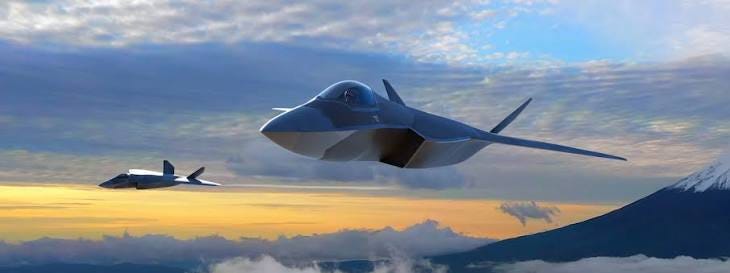
Another day, another GCAP reference. This time, though, with some firmness to it. Politico is reporting that Canada will officially finalize joining the GCAP Initiative next Tuesday at a meeting in London. Quote:
“British Defence Secretary Dan Jarvis is expected to host his Japanese and Italian counterparts, Shinjirō Koizumi and Guido Crosetto, along with Canada's Defence Minister David McGuinty, at London's Ministry of Defence to formalize the deal, one of the officials said. Like others cited in this story, the official was granted anonymity to discuss sensitive government negotiations.”
We can confirm that this is the plan, and indeed Minister McGuinty is heading to London next week to formalize a deal, which is expected to be announced formally sometime at the Farnborough International Airshow running from 20-24 July. At this time, Canada will be accepted as the first Observer state into the Initiative.
While this will allow Canada to access classified and secret information relating to the partnership, it does not come with any direct commitment unless otherwise stated. There is no confirmation of an order, no financial incentive being put on the table, and Canadian Industry will receive no preference when it comes to seeking contracts related to the program.
It does open the door, though, to those conversations, and should not be seen as symbolic in nature. The ascension of Canada as an Observer puts us in a position to further discuss involvement as the project develops. It is a critical first step that does put us ahead of others, and enables Canadian Industry representatives in the discussion. That in itself is still important, even if it seems like little.
This decision, which we were the first to report on back in July, is separate from the existing fighter review. It is complementary, as everyone will say next week—not a replacement for ongoing discussions. Even if we did order something, deliveries would likely extend into the 2040s, and so there is an immediate need to make a decision on the existing fleet.
We have also been working hard to build our relations with the GCAP Three this year. Canada and Japan have been slowly building up their defence relationship over the last year; most significantly, the two countries signed a new Equipment and Technology Transfer Agreement back in January. This agreement, in relation to GCAP, sets out the framework required for the transfer of technology, intellectual property, and information related to GCAP.
It also builds off the new Canada-Japan Comprehensive Strategic Roadmap from earlier this month. Under that roadmap, Canada and Japan agreed to further strengthen defence cooperation, including exploring opportunities to enhance interoperability between our respective militaries and to explore ways to promote cooperation in building our respective defence industrial bases.
Canada has also committed to ordering the Italian M346 as our future Fighter Lead-In Trainer, on top of Canadian company ITPS also down-selecting the aircraft for its own training needs. It's worth watching the UK here, especially given its own replacement needs.
Call it positioning, call it securing. Whatever it might be called next week, the idea is to create that pathway and engagement in a future fighter program. It wasn't the only one discussed, but it was the one that the federal government has been heavy on engaging with. Given FCAS's status as a shitshow, I can't necessarily blame them. I would also avoid any Franco-German co-development.
Granted, GCAP itself has had some waviness as of late, primarily with funding anxiety related to the UK's ever-delayed Defence Investment Plan, which luckily secured funding for GCAP as one of its major pillars. So, that is secure, at least on the immediate side of things.
GCAP itself is fairly ambitious. The Japanese need for a replacement for the F-2 by 2035 means that the project is on a tight deadline to deliver. Up until now, Japan has been very hesitant to expand the program to new partners in any sort of industrial capacity.
This hesitation in allowing additional partners has primarily been related to the potential loss of workshare, a very tense part of the GCAP initiative. The three partner nations have already come to an agreement on the split of workshare among them, and Japan, looking to safeguard her volatile aerospace sector, has been hesitant to reopen the discussion to others or risk additional potential players stealing work in the future.
My expectation was that this would be a barrier; however, it seems that Canada is deciding to look at a more incremental approach through observer status, with the hope of potentially securing economic benefit down the road. We do have simulators mentioned by Politico as an avenue where Canada could sneak in, backed by the wonderful expertise of CAE, whom I have no doubt is who's being discussed. As you know, CAE is mandated by Heaven to always get a piece of the pie when it comes to big defence projects here. Somewhere, there is CAE. Everywhere is CAE.
And while I am not one to really get hung up over the economics of a fighter fleet, it is something that has become dominant in the fighter discussion, and something that the general public is being pushed to think about in any of these discussions. Public opinion, especially for such a program, is important to its success.
Trying to sell a very expensive sixth-generation fighter jet that holds little initial industrial or economic benefit? That will be tough to go to the Canadian public, the majority of whom have little to no knowledge of the defence ecosystem, and ask for their blessing to continue on such a purchase. It will also, no doubt, be part of next week's political theatre.
Of course, we can't speak about this until we have finer details on what this observer status gets us, and what is expected of Canada. At this point, we just don't know, so it's really hard for me to discuss the possibility in detail. As it stands, we will have a foot in the door and anything else will come down the road. That's good, especially when it gets us into the conversations, but it means there is little really to discuss. We exist, we are there. It is as it is.
Of course, as many of you know, I have been highly supportive of Canada establishing a pathway to a sixth-generation platform. How this balances with the fighter review remains to be seen. At the least, running a three-fighter fleet is an exceptional challenge, and unlikely to be seriously discussed.
That could be mitigated by a very small F-35 fleet that you only envision as a temporary measure until GCAP, but that itself also presents challenges and raises questions about whether the financial investment into supporting a very expensive fleet—that you only see as temporary to remain in service a few years—is worth it. So, there are a lot of questions there regarding a potential fleet mix.
Either way, GCAP as a platform is so far out that the picture of how it looks will be delegated down far beyond anyone here. The RCAF is very supportive of a Sixth-Gen Aircraft, highly supportive. It is in the plans and has been for a while. They will no doubt be advocating for this to turn into a commitment, but this is a victory for RCAF brass either way. Good on them. They deserve to be given exciting opportunities and love.
Of course, what is going to add to the conversation will be prepping for GCAP. That has always, in a way, been in the conversation since last year, at least among some of the federal side. We need to be "Sixth-Gen Ready," as some have eloquently put it. That means having the industry and capacity to support Advanced Manufacturing, Software Development, and components related to the Sixth-Gen Supply Chain.
That exists beyond just the Fighter Review, because nothing from that will work in isolation to provide that. Being involved in the F-35 isn't necessarily building a sixth-gen supply chain, nor is it necessarily building a foundation to go beyond our Tier-IV or III role. Neither is Gripen, with how it is. Those two, no matter what, can't build that.
Is there a pathway to move up that ladder? That's the most important question folks are asking right now, and that question will play heavy on the review. I wouldn't be shocked to see it as a major reason behind any choice, but what that looks like? I don't know. The concept of the Sixth-Gen Supply Chain is conceptual in nature. Truthfully, it is up to the officials involved to determine what they want to push for. No one, I think, can define it, which itself makes it a theoretical analytic in the question.
Right now, we ain't prepared to fill that role industrially. Industry isn't there outside of tossing money at the problem. We could maybe throw a shit-ton of money, but without that industrial component? We'll always be seen as a junior, and someone like Germany? Well... and if money is the big concern, the Saudis are still around to play the slots.
That will take more than fighters, though, and extends beyond the airframe. Common Cloud, Space-Based Technologies, Data Processing, CCA—all avenues that we could tackle, but also among the unglamorous for many who dream of radars and munitions and airframes. Eventually, the choice will have to be made for where we put time and effort. Try to tackle too much, and you risk burning out, losing out by being too broad.
Either way, it will be a conversation topic in the coming years, and I recommend people prepare for it because it is in the conversation, and it will be a major factor in many decisions to come. Until then, though, we can at least be happy about this development. I am!
1- " Trying to sell a very expensive sixth-generation fighter jet that holds little initial industrial or economic benefit? That will be tough to go to the Canadian public "
Tell the Canadian people the truth : " The Global Combat Air Programme (GCAP) is being engineered to contain virtually zero U.S. components, explicitly targeting a "100% ITAR-free" (International Traffic in Arms Regulations) architecture. The core objective of the trilateral partnership between the UK, Japan, and Italy is to completely bypass U.S. export controls and technology vetoes. This design choice guarantees complete sovereign autonomy over how the aircraft is modified, upgraded, and exported. "
This was a decision was made by U.K. , Japan and Italy Pre Trump 2.0 , which makes 100% sense for any Nation to do for its own National Interest . Now the U.S. is a National Security Concern , they are unreliable and NOT STABLE , the U.S. is risk for investment and LONG TERM PARTNERSHIP .
Tell Canadian the Truth they already know , ** For OUR OWN NATIONAL INTREST Canada must get weapons and weapons systems that are NON U.S. ** you don't even need to get into the " why " ...WE ALL KNOW WHY . Canadian will gladly support this decision if the 3 founding Nations will have us .
Buy Anything But American .
2- " Of course, as many of you know, I have been highly supportive of Canada establishing a pathway to a sixth-generation platform. How this balances with the fighter review remains to be seen. At the least, running a three-fighter fleet is an exceptional challenge, and unlikely to be seriously discussed. "
So if Canada has a full fleet of F35's , Canada will have a total of 0 Air Superiority Fighter aircraft lol . If Canada gets 20-40 F35's , 80-100 Gripens ...Canada will have 80-100 4.5 Gen Air Superiority Fighter Aircraft and 20- 40 5th Ge Stealth Strike aircraft lol . Your Right " running a three-fighter fleet is an exceptional challenge " and Nowhere is that being discussed . What's being discussed is finally filling Canadian Military capability gaps by having a fleet of Aircraft that has Air to Air Fighters and a Stealth Strike / Medium Strike Recon Aircraft . Russia has a smaller GDP then Canada and they field everything up to strategic bombers lol . If having proper capability's for different mission sets is " to difficult " for RCAF leadership , demote them to PVT and post them to 2 VP in CFB Shilo , they will no longer be a problem .
Regardless of the urgency of Japan's needs, given the typical development cycle of a modern combat aircraft, the time to start looking at a replacement for the F-35 (and anything else we might use alongside it) is now. We're not in on the ground floor, but this is one of those times where close is probably good enough.