


Every so often, something small comes across my desk that piques my interest enough to write on it, even if it won’t be much. Today is, thankfully, one of those days. After spending last week talking about the struggles of nTACS Phase I and the back-and-forth of mentality over sole-sourcing things, we have a new development that might be of interest.
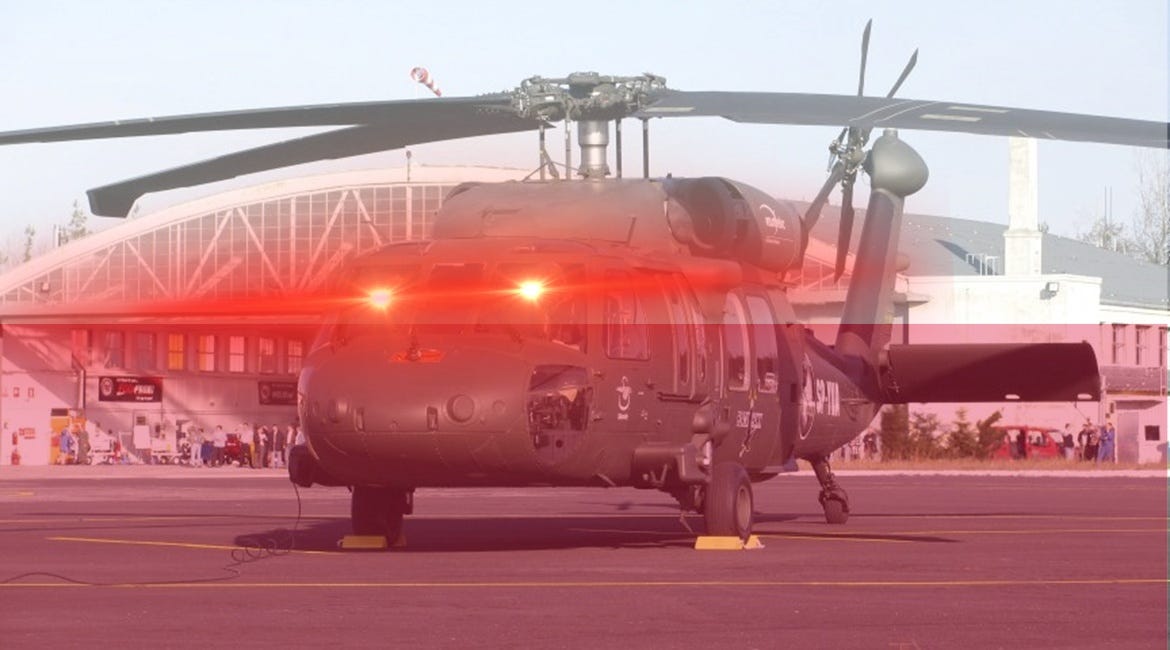
Yesterday, Paweł Bejda, a Secretary of State at Poland’s Ministry of National Defence, confirmed in a written response posted yesterday to the Sejm, Poland’s lower house, that the ministry is supporting talks on Canada acquiring S-70i Black Hawks built at PZL Mielec. The mention of the talks was hidden quietly at the bottom of a wider response about the plant’s future and was flagged to us by some of our Polish friends in the scene this morning.
I have included a link to the response, but will also include these images for those of you who don’t like to download things.


For those unfamiliar, PZL Mielec is Lockheed Martin’s largest manufacturing site outside the United States and has been building Black Hawks for over a decade. The S-70i variant is the export model that comes out of Mielec. Structurally, it’s mainly the same aircraft as the UH-60M: same airframe, GE engine, rotor, etc., with some minor adaptations per customer and more COTS systems integrated into the baseline.
There is also, and this might be important, a difference in how one goes about acquiring them. The UH-60M comes through the U.S. government, with government-furnished equipment through the FMS system. The S-70i, in contrast, can be bought directly from Lockorsky through a DCS and configured to the customer’s requirements.
Of course, at this moment, we don’t know the nature of these discussions, how far along they are, or what the consideration on Canada’s side is. This could, very easily, not be defence-related and could be for an agency outside the DND (though there aren’t many requirements for something else that would match), or at the least it could be outside the scope of nTACS Phase I and instead be consultation work regarding nTACS Phase III.
However, given that we have an existing Black Hawk requirement through nTACS Phase I, I am at least inclined to think of the possibility that this is related. As I should note, my and others’ understanding is that nTACS Phase I was moving through the FMS system. It was not going through DCS with Lockorsky.
The halt on the Black Hawk sole-source was tied into this FMS route, but also not limited to it. As I know it, alternative pathways have been discussed, but this was not generally one I was tracking. So this is also new to me as well. Now, I am not saying this is an alternative to FMS being worked through. I have no way to confirm that as of now.
But it also isn’t impossible, nor would it surprise me if the idea was raised. Optics, after all, while not the only reason for the pause, were still a major factor, same as the politics behind things. There are people who will argue, and have argued, against any sole-sourcing; that will remain either way.
But is it easier to shift this from an American purchase to one supporting our Polish allies? An ally we are heavily courting this year and who is looking at the future of Mielec, which has been in a bit of a political back-and-forth after previous negotiations with Poland’s Armament Agency for a 32-aircraft order were paused last summer.
So it also isn’t lost on me that this question, which was admittedly asked by a member of Poland’s Civic Coalition, could have some political favouring and wording designed to present a positive picture. Still, I do want to make note of it, as it could become a point later on.
I also guess it opens another conversation topic regarding the current climate, one that we are still facing domestically. How far does the trend of American diversification go, especially as it relates to subsidiary and foreign operations? How does the push for diversification stand up when that American-backed capacity is coming from a third ally who sees it as a major contributor to their own Defence Industrial Base?
Mielec claims, as far as I have found, that the S-70i meets the 65% European requirement to qualify for SAFE funding, but that is separate from the major components, and they are counting the total cost of building the helicopter. Similar to here, the question remains: how much of a platform must be localized to be deemed un-American?
This, I think, is actually a useful marker for the current question on the extent of diversification and what counts as American, given the current climate. A large part of the S-70i comes from Polish industry; it would undoubtedly be welcomed by our Polish allies if we were to help support that capacity, one they deem as important to their DIB.
Yet the major components still come from American industry, and they will still be supporting American industry. For some, that connection alone is enough to act as a disqualifier. For others, it would present a very well-rounded compromise to the current climate.
It’s kinda like a litmus test, I guess, for how far the current American mentality goes with individuals and, potentially, wider organizations. It is by far one of the most complex potential procurements when it comes to judging diversification. There is no domestic angle in play; there are reasonable grounds to support our European allies’ manufacturing capacity, but the strings are still there enough to raise some more hardline eyebrows rather easily.
It is something to think of, at the least. I am obviously still trying to gather more information regarding these discussions, as, again, they are new to me. If I do get some info, it’ll end up in the newsletter either way. Still, something interesting to think about!
How does a S-70i satisfy the needs for CANSOFCOM though. I thought it was pretty clear they wanted or were arguing for hawks similar to USSOCOM’s hawks with all their goodies.
I like it. It would satisfy me, not that that means anything.