


Release after release this week! After getting UGVs, and talking about CDSEA and NorthWatch, we have yet another big RFI drop hitting us this week. This time it's REALLY special because it's a Navy RFI for once!
We finally have an RFI out now for the new class of Dive Tenders for the Naval Auxiliary. This was expected. We reported a few weeks ago that the Navy hoped to get an RFI out soon, and this is one of those minor projects; well, not minor to me. I love this stuff! But this is one of those projects without much glitz and glamour that often gets forgotten about.
Dive Tenders play a very important role for the Navy, providing the essential surface support required for safe undersea operations. Whether managing the lifelines for clearance divers or serving as a mobile base for explosive ordnance disposal, dive tenders are essential for supporting the RCN's undersea ambitions.
So, since you guys loved the other RFI breakdowns we did recently, and I doubt anyone else will talk about this, how about we take a look at what the Navy is asking for; and believe me, you might be surprised.
The Requirements
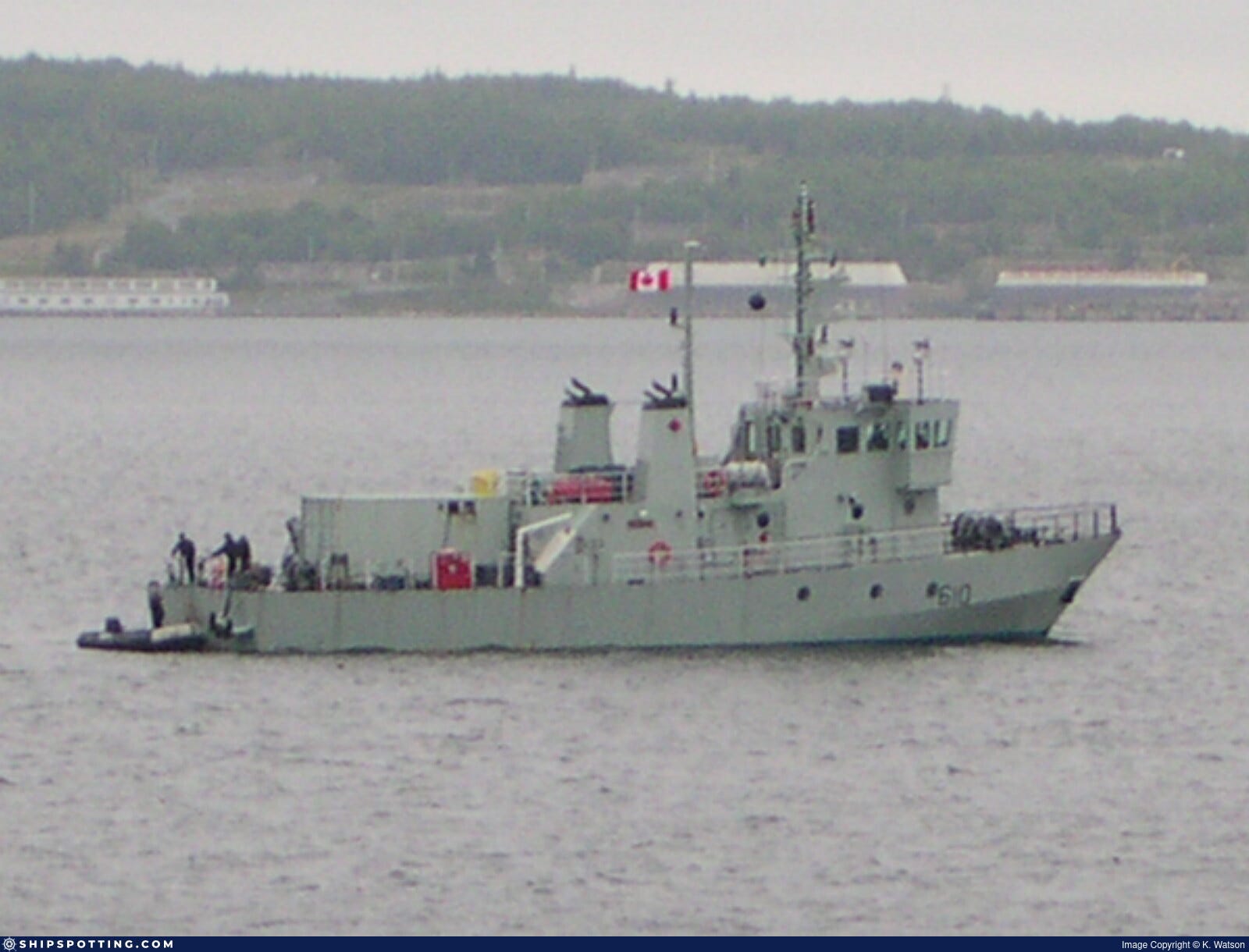
The Dive Tender Replacement project aims to acquire two Canadian-built Diving Support Vessels to replace the aging Granby and Sechelt-class vessels currently stationed at Fleet Diving Units Atlantic and Pacific.
These new platforms are expected to be approximately 35 to 45 metres in length and under 500 Gross Tonnes, slightly bigger than the vessels they are replacing, but keeping within a fairly condensed package. This includes the continued decision to omit features such as saturation diving systems, a diving bell, or a moon pool like their predecessors.
To get some of the obvious out of the way, the vessels must be constructed within Canada in support of the National Shipbuilding Strategy, if there was ever any doubt of that by anyone. As a note to those who will ask, yes, one vessel will be delivered to Fleet Diving Unit Pacific in Esquimalt, and the second to Fleet Diving Unit Atlantic in Halifax. I know some of you like to know that it's in there, even if it is the obvious answer.
The required service life of each vessel is a minimum of 25 years, and they must maintain a full operational availability rate of at least 85 percent, excluding standard docking cycles. Operationally, these vessels will be designated as Canadian Forces Auxiliary Vessels, staffed by an eight-person core crew consisting of: a Tender Charge or TOIC operator, a senior diver, a marine engineering technician, an electrician, a Senior Boatswain's Mate, and three deckhands.
This core crew is augmented by up to 16 mission-specific crew members, resulting in a full complement of 24 personnel for whom onboard berthing, toilets, and wash facilities must be provided.
Depending on the mission, the platform must accommodate four to eight qualified divers for rebreather missions, or 14 to 16 qualified divers for surface-supplied diving operations. Out-of-harbour operations are defined by a maximum combined transit and on-station timeframe of five days, during which the vessel must store enough provisions to sustain itself completely independently.
A standard baseline mission breakdown includes a 24-hour transit at cruising speed to the designated location, three full days of on-station operations, and a 24-hour return transit, requiring the vessel to achieve a minimum free-running speed of 13 knots in a fully loaded, deep departure condition in calm water.
The vessel must operate year-round within coastal waters near Halifax and Esquimalt. The vessels are required to operate through a full 24-hour day under both unrestricted and restricted visibility conditions.
In terms of rough weather performance, the vessel must be capable of transiting in Sea State 4 and surviving in Sea State 5. Furthermore, it must successfully maintain station over a fixed position and heading, safely lower divers into the water, hoist heavy equipment or debris, and launch or retrieve its onboard small boat while operating in Sea State 3 conditions. Threat conditions stipulate that these vessels will not be intentionally assigned to missions where opposing hostile maritime forces operate.
I was surprised to see how heavily the dynamic positioning requirements are prioritized here. It is by far one of the most significant and complex technical hurdles that the RFI lays out for the vessels. Specifically, the RFI asks industry for their experience in designing and constructing vessels with advanced DP2 or DP3 architectures.
Integrating a fully redundant DP3 system, for example, requires duplicate power distribution, independent engine compartments, and separated control networks to guarantee the ship won't drift even if a catastrophic system failure occurs. Even though it is looking like a DP2 system over DP3, integrating this into a hull restricted to just 35 to 45 metres in length and under 500 Gross Tonnes is an extraordinary engineering squeeze.
The vessel's layout must center around a large, multi-functional working deck that provides clear, unobstructed space for handling large objects and supports the simultaneous deployment of up to two standard 20-foot containers, or alternatively, a single oversized 20-foot container.
This workspace must also provide the necessary interfaces for deck or bulwark-mounted machinery, including a small boat crane, a diving platform lifting appliance, and a large general-use utility crane capable of deep-sea salvage and personnel transportation.
To support the operational footprint, the vessel's sub-systems must deliver internal and external communications and robust margins for power generation sufficient to support all onboard operations, including operating diving equipment for 24 consecutive hours, alongside an efficient propulsion system that secures adequate speed and station-keeping capabilities.
The key tasks demanded of the platform focus heavily on mine countermeasure and explosive ordnance disposal operations. The vessel must fully embark the new Remote Minehunting and Disposal System. It must be capable of deploying autonomous vehicles, mine-disposal vehicles, non-explosive training systems, and a containerized transportable command center in support of MCM.
For diver-led operations, the platform must safely deploy clearance teams into mined areas using a signature-reduced small boat to counter influence-fuzed mines, providing safe storage for explosives, low-signature rebreathers, and a containerized recompression chamber. It must also protect high-value maritime infrastructure by providing dedicated storage for explosives and explosive-disposal tools, allowing teams to search for, render safe, or dispose of unexploded ordnance and improvised explosive devices.
For physical and remote seabed intervention, the vessel must facilitate mixed-gas surface-supplied diving operations down to depths of less than 100 metres of seawater. This requires integrated mixed-gas storage tanks, an umbilical gas distribution system, a containerized recompression chamber, and heavy-duty cranes robust enough to support a loaded three-diver stage. These, alongside specialized hand-held rescue tools, are also critical to support submarine search and rescue operations aimed at aiding trapped submarine crews, another secondary role of the Tenders.
Finally, the platform is tasked with handling light underwater salvage and deeper remote interventions. The open working deck and crane systems must handle and temporarily store salvaged debris while utilizing lifting bags and hydraulic-powered underwater tools.
For remote operations down to depths of 305 metres, the vessel must concurrently deploy and operate remotely operated vehicles, autonomous underwater vehicles, side-scan sonars, and atmospheric diving systems housed within a containerized remote mine-hunting and disposal system.
The vessels are also required to act as a platform for diver training, meaning they must comfortably embark trainees and support the full spectrum of diving tools required by course curricula, while occasionally aiding in Search and Rescue operations using their small boats and life-saving equipment.
The Navy is also seeking industry feedback regarding whether a commercial-off-the-shelf solution can be modified to meet these requirements, requiring estimates on build times and costs. Shipyards must outline their past experience in constructing similar vessels, detail the maximum dimensional capacities of their construction facilities, and specify their delivery methods for transporting the vessels to their respective Atlantic and Pacific destinations.
Thoughts
Overall, the future Dive Tenders are essentially Offshore Support Vessels, modified to fit the requirements that the Navy sets out. That is for the best, in my opinion. Taking the COTS approach here is the easiest and most efficient way to acquire this capability.
It aligns with some of the concepts that I've heard Vice-Admiral Topshee discuss before. How can the Navy leverage commercial industry and platforms to rapidly and cheaply acquire capabilities? This was mostly discussed around the shift of CDC to a corvette from a proper Kingston replacement, where such a concept was discussed as a way to replace potential Kingston-class capabilities and roles in the event of conflict.
Essentially, does the Navy need to maintain dedicated, purpose-built small vessels? Or can such capabilities rather be acquired cheaply off-the-shelf, or acquired only when needed in the event of conflict or need? The RFI asks this same question; and for a lot of support and auxiliary capabilities, I do think it is valid to ask.
This doesn't guarantee a COTS solution, but merely sets the stage for the potential acquisition. Those of you around especially know that, when it comes to the undersea territory, modified COTS platforms are Noah's little go-to suggestion.
Keep note also, again, the modularity trend continues here. What we said in last week's Q&A remains true: all platforms, no matter how small, must have the capacity to contribute to Maritime Domain Awareness. That includes through MAC (Modular, Autonomous Containers) and broader Autonomous Systems.
These will likely evolve into the primary way that non-combatant and smaller vessels will contribute to the picture, primarily acting as deployable platforms and motherships for other systems. This will especially be true for platforms like the Dive Tender and FASST-V that don't necessarily have the margins or capacity for high-end, native onboard sensors.
Subsea remains one of the most critical areas of operations that countries struggle with maintaining awareness of. Canada is especially vulnerable given the vast distances that much of its critical undersea infrastructure (such as cables) is spread across, and the limited redundancy in existing systems.
So while not full platforms as many discuss and engage about, these two will provide another layer in the Undersea Awareness domain. It's almost a shame there are only two coming! However, FASST-V might also provide some relief in this department.
Though I stress that we should not fall into the risk of scope creep. The requirements outlined here already ask for much out of these little guys, but they still manage to fit their role and requirements even with a bit of flexibility. My big concern with FASST-V still remains concerned about scope creep and trying to 'OPV-lite' what are first and foremost supposed to be training vessels.
Time will tell there; but the initial look is expected, albeit with a few high-end surprises thrown in. It is very much a much-needed replacement, and so I don't have any complaints.
Just a thought. We will eventually need 2 submarine rescue ships. Would it not be cheaper having one class of ship that can do both sub rescue and diver support on one ship. Buying two slightly used off shore support ships and having them overhauled to the RCN needs.
This is great news. Still, I fear the 'elephant in the room' , not only here, but elsewhere. Will the RCN find the personnel willing to be the fleet divers? This is a very physically and mentally challenging job, in my view. ... My best wishes here to the RCN and to the Fleet Diving Unit.